
QUALITY & TESTING · FIELD GUIDE
How to Send a Peptide Sample to Janoshik for Independent Testing
If you are sending a peptide sample to Janoshik for independent testing, the process involves more than simply mailing a vial. This guide documents a real Signalyn Bio submission—from selecting the test and confirming the order to preparing the sample, packaging it, arranging international shipping and submitting tracking information.
Because laboratory requirements and shipping instructions can change, this guide distinguishes between what happened in this submission and what should always be confirmed from your own current Janoshik order.
QUICK ANSWER
How Do You Send a Peptide Sample to Janoshik?
The practical workflow is: define what you want to verify → choose the appropriate test → prepare and label the sample → complete the laboratory submission information → ship the sample according to the selected testing requirements → wait for laboratory analysis → receive the report → verify the report and interpret only what the selected test can actually support.
If the goal is only chromatographic purity, HPLC may address that question. If molecular identity also needs to be reviewed, mass spectrometry or another appropriate identity method may be required. A single purity percentage should not automatically be treated as complete quality evidence.
PROCESS OVERVIEW
How the Janoshik Sample Submission Process Works
The first seven stages below are supported by this submission’s actual order records, sample photos, packaging and shipping materials. The final stages remain pending in this case study.
COMPLETED
1. Choose Test
Define the analytical question before selecting the test.
COMPLETED
2. Quote & Order
Confirm samples, analytical scope, payment and order details.
COMPLETED
3. Sample Information
Match sample ID, sample name, batch details and report information.
COMPLETED
4. Prepare Sample
Prepare the amount and sample format specified for the selected analysis.
COMPLETED
5. Label & Pack
Keep sample identity clear and protect the vial during transport.
COMPLETED
6. Arrange Shipping
Use the laboratory’s order-specific shipping instructions and confirm exceptions.
COMPLETED
7. Submit Tracking
Provide shipment tracking and required package information after dispatch.
COMPLETED
8. Lab Receipt
Laboratory receipt confirmed
COMPLETED
9. Testing
Testing completed.
COMPLETED
10. Report
Final report issued
COMPLETED
11. Verification
Batch-specific report published
WHY INDEPENDENT TESTING
Why Use Independent Peptide Testing?
A supplier’s COA, HPLC chromatogram, mass spectrum and batch records document the supplier’s own quality workflow. Independent third-party testing adds analytical evidence generated outside that workflow using the sample actually submitted to the laboratory.
Supplier Documentation
- Certificate of Analysis
- HPLC data
- Mass spectrometry data
- Batch and manufacturing records
These records remain essential for batch review and traceability.
PLUS
Independent Third-Party Evidence
- External laboratory analysis
- A separately submitted sample
- Independent analytical reporting
- Additional evidence for customer review
The report answers the analytical questions included in the selected testing scope—not every possible quality question.
For a deeper explanation of why a single HPLC purity percentage is not a complete quality assessment, see Peptide Purity Explained. For the broader role of external analysis in our quality system, see Third-Party Testing.
THE REAL SUBMISSION
The actual testing order behind this guide
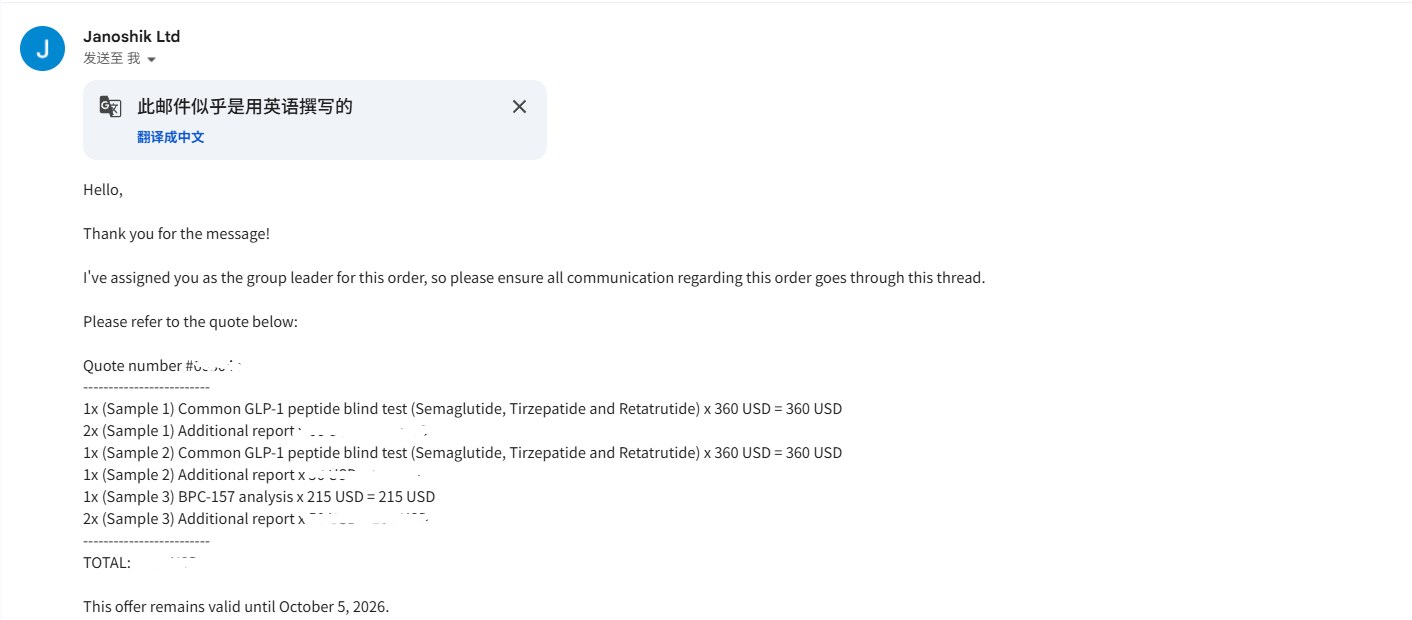
This guide follows a real Signalyn Bio submission rather than a hypothetical workflow. The order included two Common GLP-1 peptide blind tests and a separate BPC-157 analysis. Additional Reports were also requested because the same submission was used for a distributor group test.
01
Sample 1
Common GLP-1 peptide blind test.
02
Sample 2
Second Common GLP-1 peptide blind test.
03
Sample 3
BPC-157 analysis with participant Additional Reports.
Need a shared testing option? This submission also supported a distributor group test. One designated sample was analyzed once, while participant Additional Reports were linked to that shared analysis. Multiple reports do not mean that each participant’s vial was independently tested. See how Signalyn Bio Peptide Group Testing works →
01
Choose the Right Janoshik Test
Do not start with the test name. Start with the analytical question.
Purity Profile
What does the chromatographic profile show under the stated method?
Quantity / Content
How much of the specified material is measured in the submitted sample?
Additional Parameters
Questions such as sterility, endotoxin or heavy metals require their own specific testing scope when applicable.
Key principle: one result should not be interpreted as answering analytical questions that were never included in the test.
02
Request a Quote and Confirm the Order
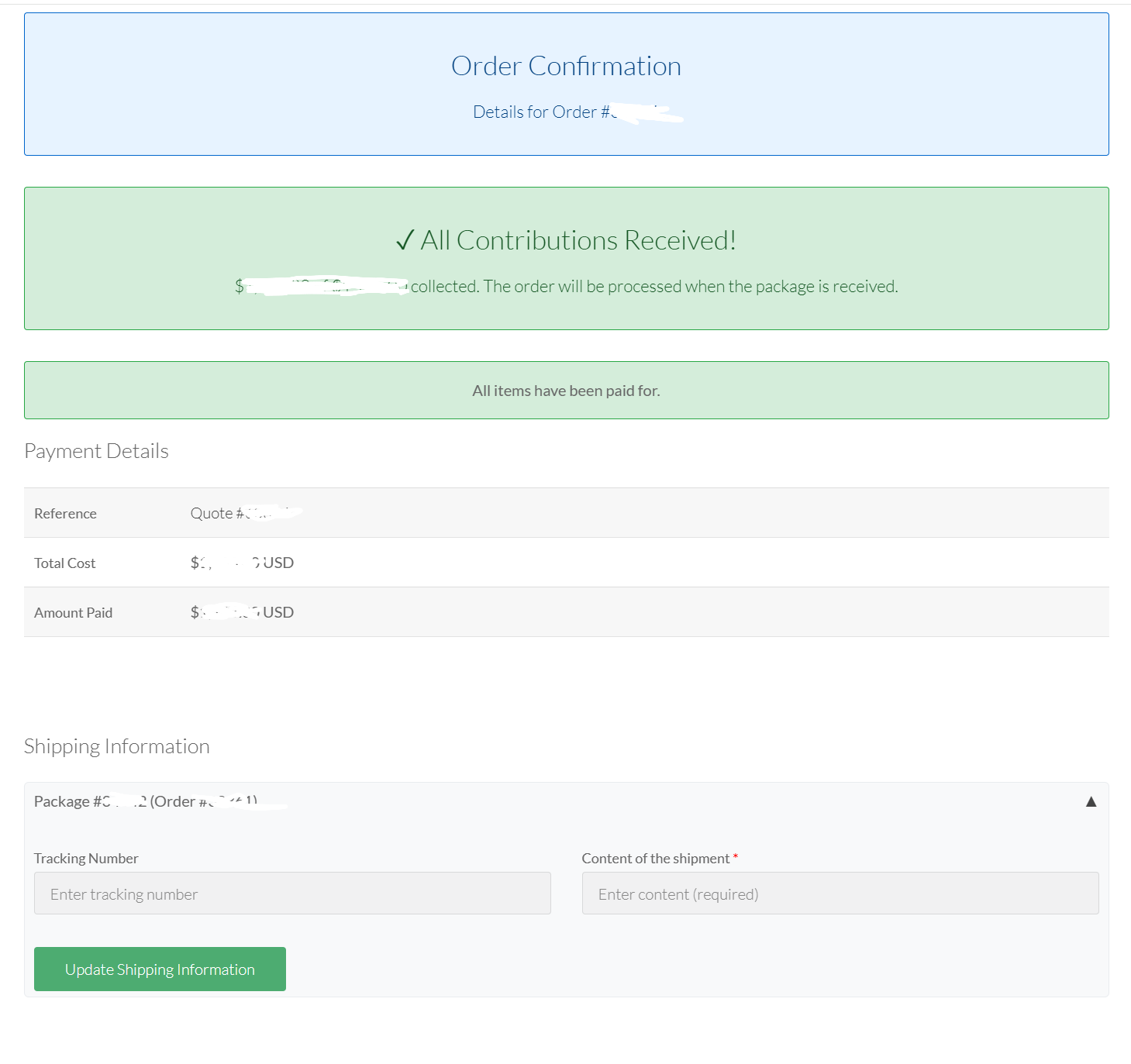
The real workflow moved from test request to quote, payment, order confirmation and detailed shipping instructions.
Define SamplesNumber of samples and the requested analytical scope.
Review QuoteCheck that each sample and report requirement matches the intended order.
Confirm OrderAfter payment, the order moves into sample and shipping preparation.
03
Complete Your Sample Information
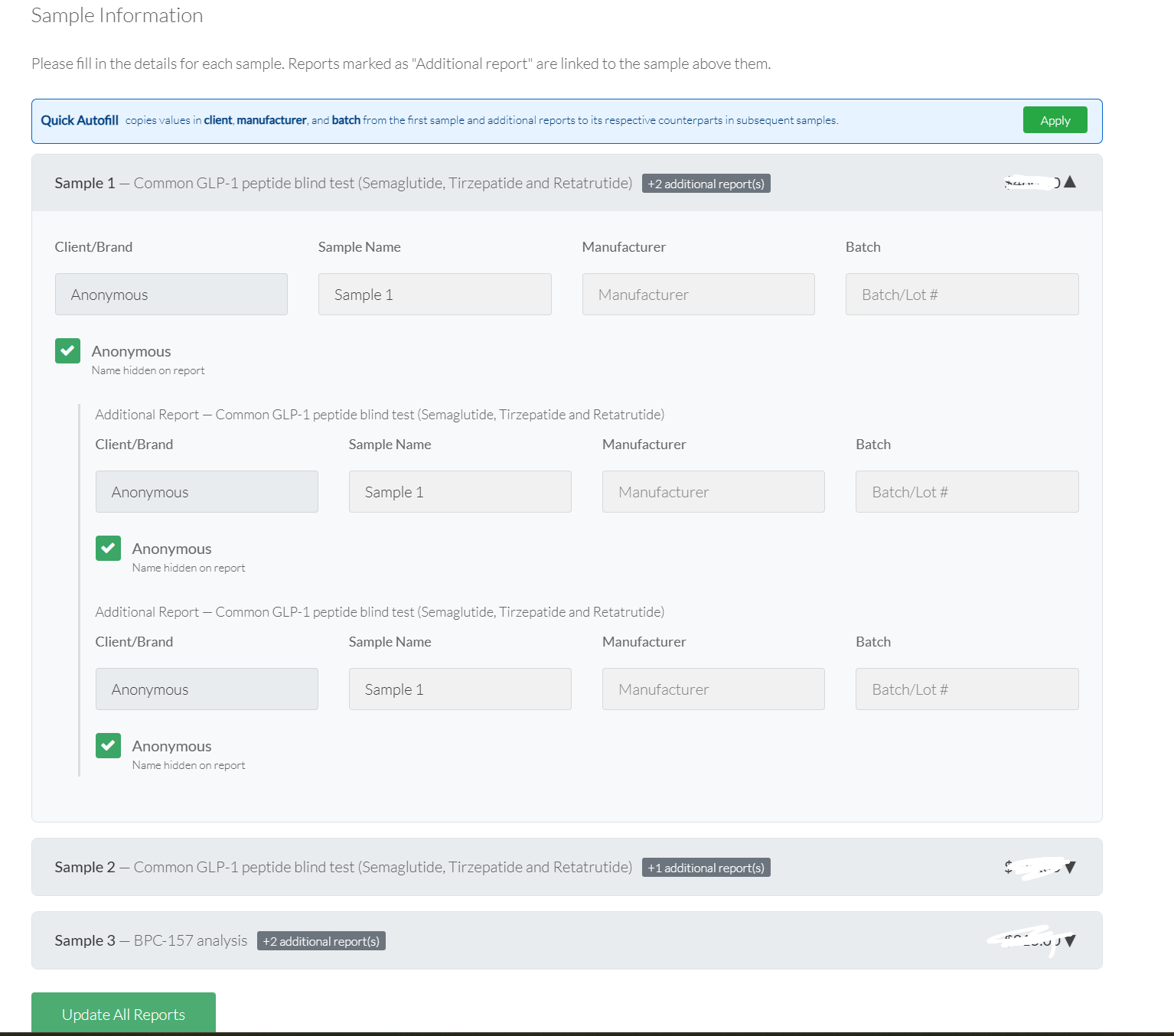
Keep the laboratory order and the physical sample aligned. In this submission, the order interface connected each Sample Number with the sample name, manufacturer, batch information and any Additional Reports.
- Confirm the Sample Number.
- Confirm the sample name and test.
- Record the amount being sent.
- Complete report header information before the laboratory receives the package.
- Keep the same identification throughout packing and shipment.
Traceability matters: Sample ID → package → laboratory order → eventual report should describe the same submitted material.
04
Prepare the Peptide Sample
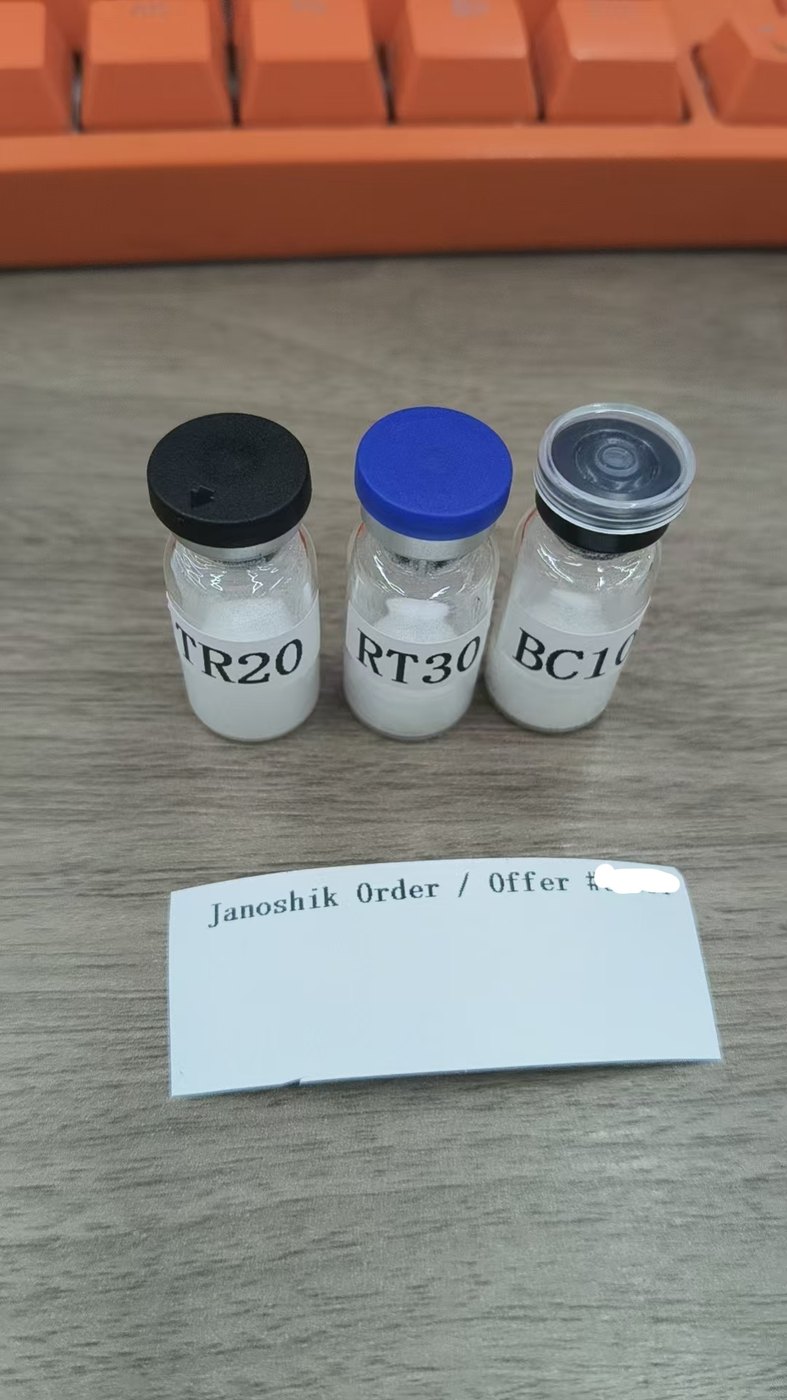
For the lyophilized peptide samples in this order, Janoshik instructed us to send at least one whole unreconstituted vial for the test. That instruction belongs to this specific sample type and order context.
Whole vialUse the amount requested for the selected test.
UnreconstitutedThe lyophilized vial in this order was sent without reconstitution.
Clearly identifiedThe physical sample must remain linked to the order Sample Number.
Do not generalize one order: different sample forms and additional tests can require different quantities. Always use the preparation instructions issued for your own order.
05
Label and Pack the Sample
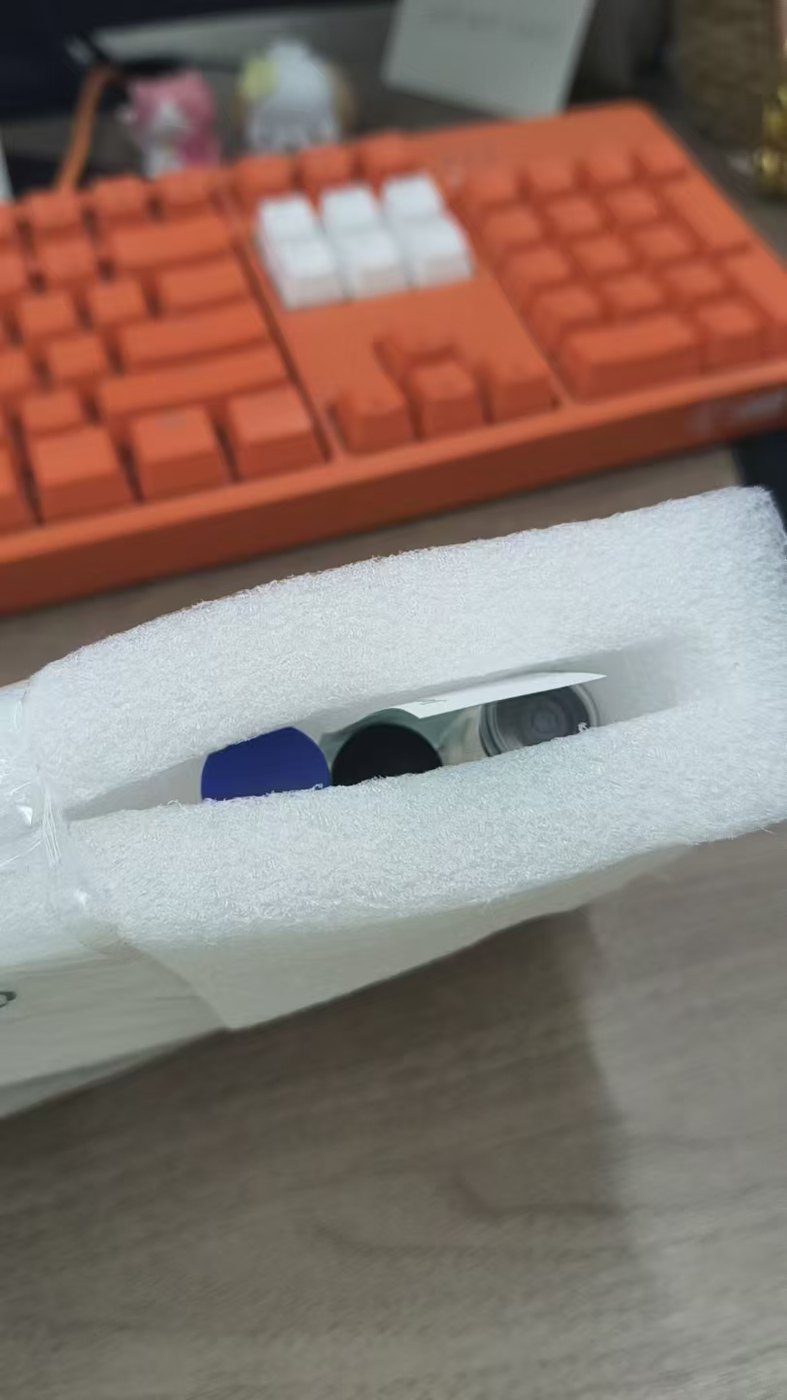
The submitted vial should be identifiable against the order and physically protected during transport. In this case, the vials were placed inside protective foam before the international shipment was arranged.
- Match vial identification to the laboratory Sample Number.
- Keep different samples clearly separated.
- Use protective inner packaging to reduce movement and breakage risk.
- Include any order-identification note required by the laboratory instructions.

06
Follow Your Janoshik Shipping Instructions
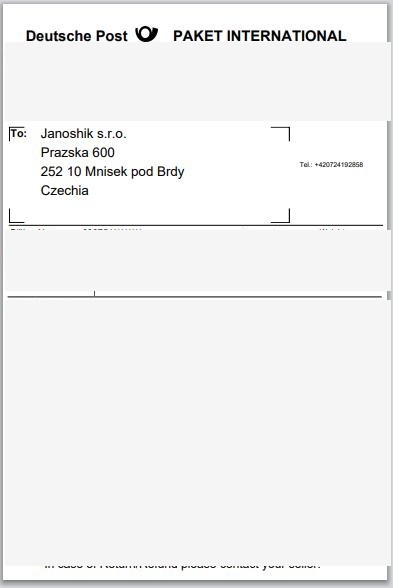
After the order was confirmed, Janoshik supplied detailed labeling, packing and shipping instructions. These included courier, destination, package information and tracking requirements for this order.
Do not copy old customs details from this article. Courier requirements, declared contents, documentation and laboratory instructions can change. Use the instructions attached to your own order and confirm anything that differs before dispatch.
07
What If Your Freight Forwarder Has Different Requirements?
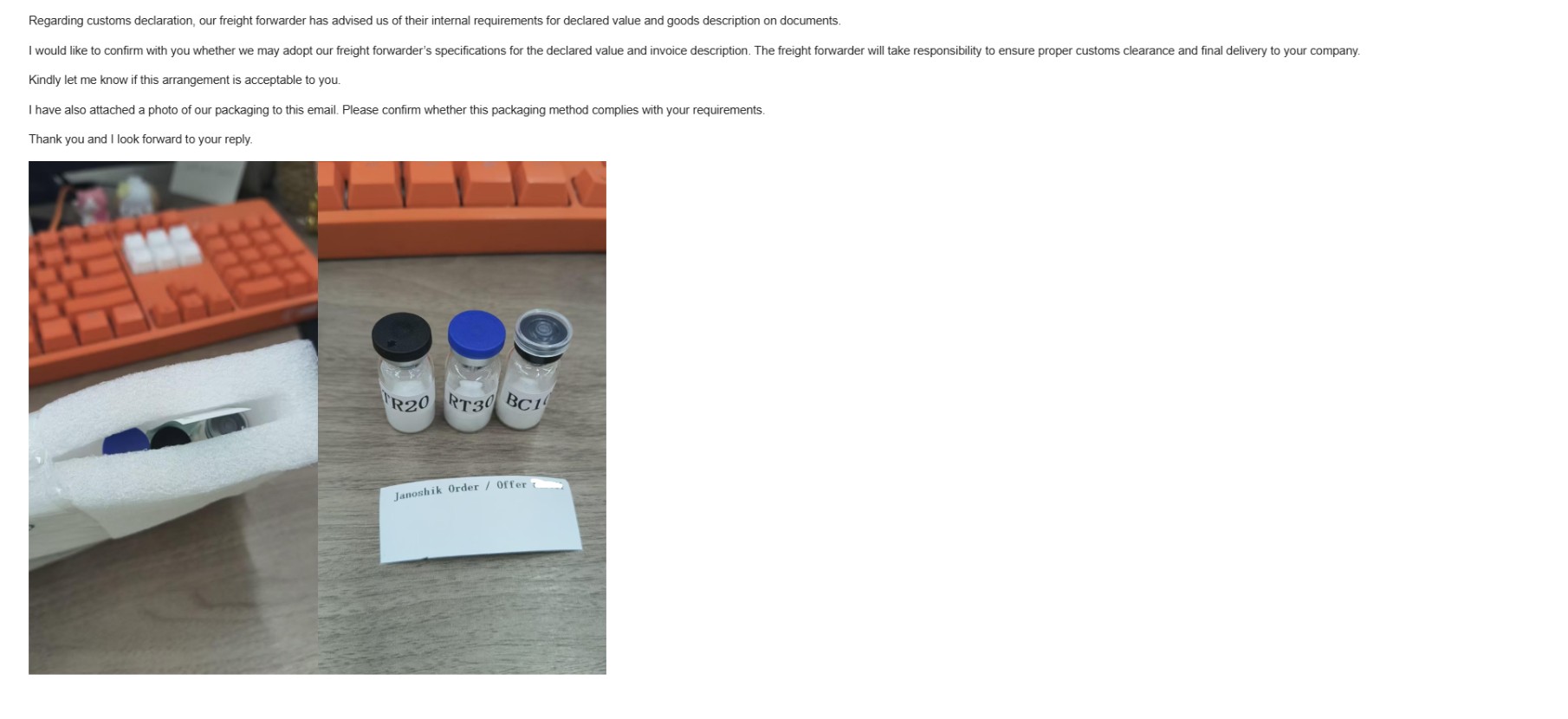
Our freight forwarder had its own requirements for the declared value and goods description. Instead of assuming those changes were acceptable, we explained the arrangement to Janoshik and sent a photo of the proposed packaging for confirmation.
Janoshik confirmed that the arrangement was acceptable and asked us to keep them updated with the tracking information.
Practical rule: when your carrier or freight forwarder requires something different from the laboratory’s shipping instructions, confirm the exception with the laboratory in writing before the package leaves your control.
08
Ship the Package and Submit Tracking
Once the shipment was arranged, the next operational step was to provide the tracking information and shipment contents through the order workflow. This creates a clear handoff between dispatch and laboratory receipt.
- Retain the carrier tracking reference.
- Submit the tracking through the order process requested by the laboratory.
- Keep the sample quantity and package contents consistent with the order.
- Retain the shipping record for your own case-study timeline.
CURRENT CASE-STUDY STATUS
What Independent Peptide Testing Can and Cannot Prove
This page intentionally stops where the first-hand evidence stops. The later stages will be added only after they occur and can be documented.
Completed & Documented
- Test scope selected
- Quote received
- Payment completed
- Order confirmed
- Sample information completed
- Samples prepared
- Packaging confirmed
- Shipment arranged
- Tracking submitted
Pending in This Case Study
- Laboratory receipt confirmation
- Actual testing timeline
- Final report issuance
- Report verification workflow
- Final report interpretation
Last updated: October 2026. This guide will be expanded as the actual submission progresses.
REPORT VERIFICATION CHECKLIST
What to Check When the Janoshik Report Arrives
Confirm that the peptide name, sample reference, and any identifying information match the material you submitted.
Confirm that the report corresponds to the analytical method you actually ordered.
If HPLC was ordered, review the reported chromatographic purity together with the chromatogram and method context.
If identity testing was ordered, review the mass-related result and whether it supports the expected peptide.
Check the chromatogram, mass spectrum, or other supporting analytical records included with the report.
Do not infer attributes that were not actually tested. Purity, identity, content, endotoxin, sterility, residual solvents, and heavy metals are separate questions.
INTERPRETING INDEPENDENT TESTING
What an independent peptide test can—and cannot—establish
A laboratory report is strongest when its scope is interpreted precisely. It can provide evidence about the submitted sample and the parameters actually tested. It should not be expanded into claims the selected analysis did not measure.
It can provide evidence about
- The identity-related result when identity was tested
- The chromatographic purity/profile when HPLC was performed
- Quantity/content when that parameter was included
- Other specifically requested analytical parameters
- The sample that was actually submitted to the laboratory
It does not automatically prove
- Every vial in a batch was individually tested
- Sterility unless sterility testing was performed
- Endotoxin status unless endotoxin testing was performed
- Manufacturing conditions or storage history
- All future batches from the same supplier
- Overall supplier reliability from one analytical result
Bottom line: a test report answers the analytical questions that were actually tested—not every possible question about peptide quality.
QUALITY EVIDENCE SYSTEM
Independent testing works best as one layer of a broader quality system
The most useful question is not “Do you have one report?” but “How does the tested sample connect to the batch, the supplier’s analytical records and the material being supplied?”
Production Batch
COA
HPLC
Mass Spectrometry
Independent Test
Batch Verification
Certificate of Analysis
Use the COA as a batch-specific summary, then review the underlying evidence where available.
HPLC Analysis
Chromatographic evidence related to purity and sample profile under the stated method.
Mass Spectrometry
Molecular-mass evidence supporting identity assessment.
Quality Control
Connect sample identity, analytical records and supplied batch documentation.
FREQUENTLY ASKED QUESTIONS
Sending peptide samples to Janoshik: FAQ
How much peptide should I send to Janoshik?
The amount depends on the sample form and the selected test. For the lyophilized peptide samples in this order, the instruction was to send at least one whole unreconstituted vial. Use the quantities stated in your own order instructions rather than copying another submission.
Should a lyophilized peptide vial be reconstituted before testing?
Not in this specific submission. The instruction for these lyophilized peptide vials was to send a whole unreconstituted vial. Different sample types or analytical scopes may have different requirements.
How should the samples be labeled?
Keep the physical sample identification consistent with the laboratory order and Sample Number. The purpose is to maintain a clear connection between the submitted vial, the selected analysis and the eventual report.
Can multiple peptide samples be shipped in the same package?
Follow the instructions for your own order. In this submission, multiple samples were part of one order and were individually identified. Separate orders may require different handling, so do not assume the same packaging approach applies.
When do I receive the shipping instructions?
In this case, detailed labeling, packing and shipping instructions were provided after the order was confirmed and funded.
What if my freight forwarder requires different customs documentation?
Do not make the change silently. Explain the carrier or freight-forwarder requirement to the laboratory and obtain confirmation before dispatch. That is the approach used in this submission.
How long does Janoshik testing take?
We received the samples last Friday and obtained the finalized report on Tuesday.
Can I join a Signalyn Bio group test instead of arranging the full submission myself?
Yes. Signalyn Bio distributors and customers can participate in eligible group-testing rounds. Signalyn Bio coordinates the sample, laboratory communication, packing, shipping and tracking. See the Peptide Group Testing Program for participation details.
RELATED RESOURCES
Continue the quality review
NEED TESTING SUPPORT?
Need a simpler route to independent peptide testing?
Signalyn Bio coordinates peptide group-testing rounds for distributors and buyers who want third-party analytical documentation without managing the entire submission workflow themselves.