
PEPTIDE PURIFICATION SERVICES
Peptide Purification Services & HPLC Purification Support
Signalyn Bio provides peptide purification services designed around sequence characteristics, target purity, batch size, sample complexity, and downstream analytical requirements.
Purification can be integrated with custom peptide synthesis, analytical HPLC, mass spectrometry, lyophilization, packaging, and batch documentation to support a complete research or manufacturing workflow.
PURIFICATION CAPABILITIES
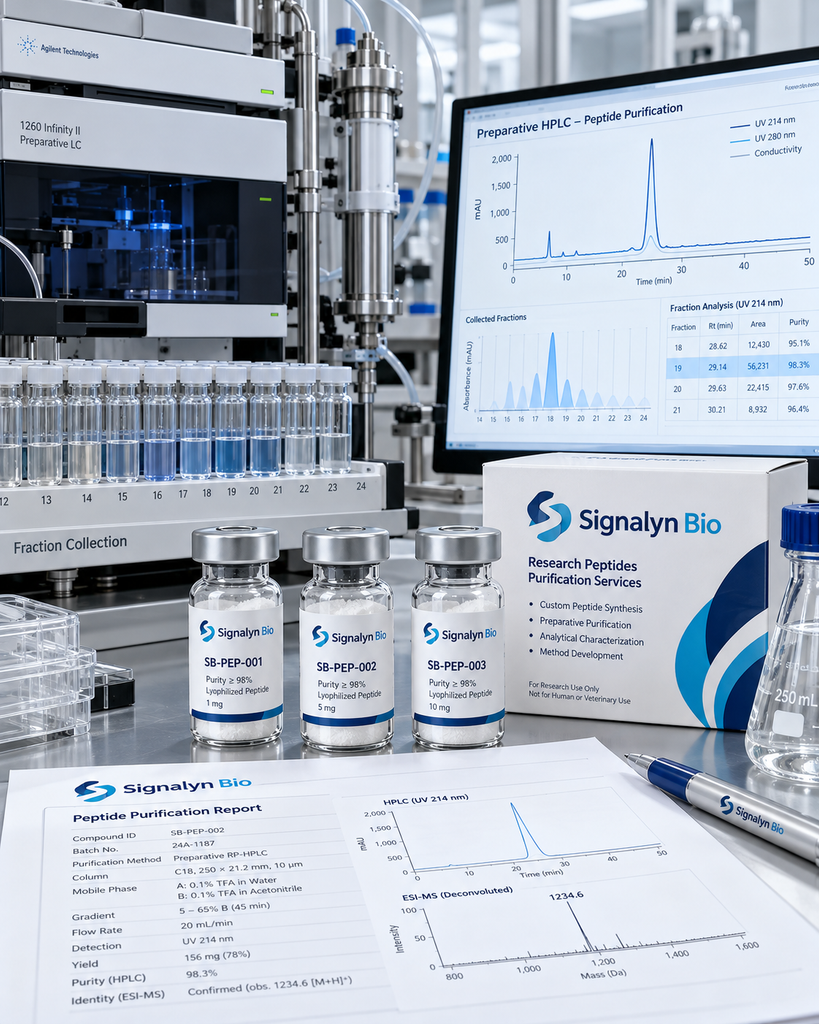
Peptide Purification Capabilities
Purification strategy should be matched to the peptide rather than applied as a single standardized method. Sequence length, hydrophobicity, charge, crude-sample complexity, production scale, and target purity can all affect the separation workflow.
Target Purity Planning
Purification requirements are reviewed according to the intended research use, analytical scope, downstream processing, and project-specific purity target.
Preparative HPLC Purification
Chromatographic separation can be used to isolate target peptide material from synthesis-related impurities and other components in the crude sample.
Method Optimization
Mobile-phase conditions, gradient strategy, loading, and collection parameters can be adjusted according to peptide behavior and project needs.
Fraction Collection & Pooling
Selected chromatographic fractions can be collected, reviewed, and combined according to analytical performance and the required purity specification.
Post-Purification Verification
Analytical HPLC and mass spectrometry can support review of chromatographic purity and molecular identity before final processing.
Lyophilization & Final Processing
Purified peptide material can move into lyophilization, packaging, storage, and batch-documentation workflows according to project requirements.
WHAT AFFECTS PURIFICATION
Factors That Affect Peptide Purification
Two peptides with the same target purity can require different purification strategies. Early review of sequence and sample characteristics helps define a more appropriate process.
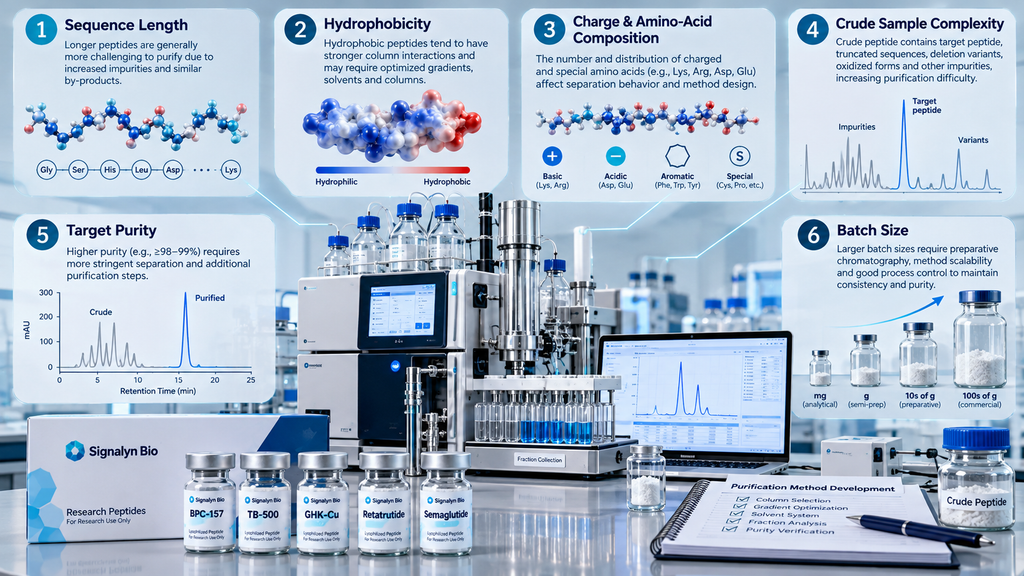
Sequence Length
Longer sequences can increase synthesis complexity and may produce a more complex crude impurity profile.
Hydrophobicity
Hydrophobic peptides can behave differently during reversed-phase chromatography and may require method adjustment.
Charge & Composition
Amino-acid composition and charge can influence chromatographic retention, peak shape, and separation behavior.
Crude Sample Complexity
Deletion sequences, truncated products, protecting-group related species, and other synthesis-related components can affect separation difficulty.
Target Purity
Higher purity targets can require additional separation, fraction review, or repeat purification depending on the sample.
Batch Size
Scale influences loading, collection volume, solvent use, fraction handling, and downstream processing requirements.
PURIFICATION WORKFLOW
Typical Peptide Purification Workflow
A structured workflow connects crude-material review, chromatographic separation, fraction evaluation, analytical verification, and final processing.
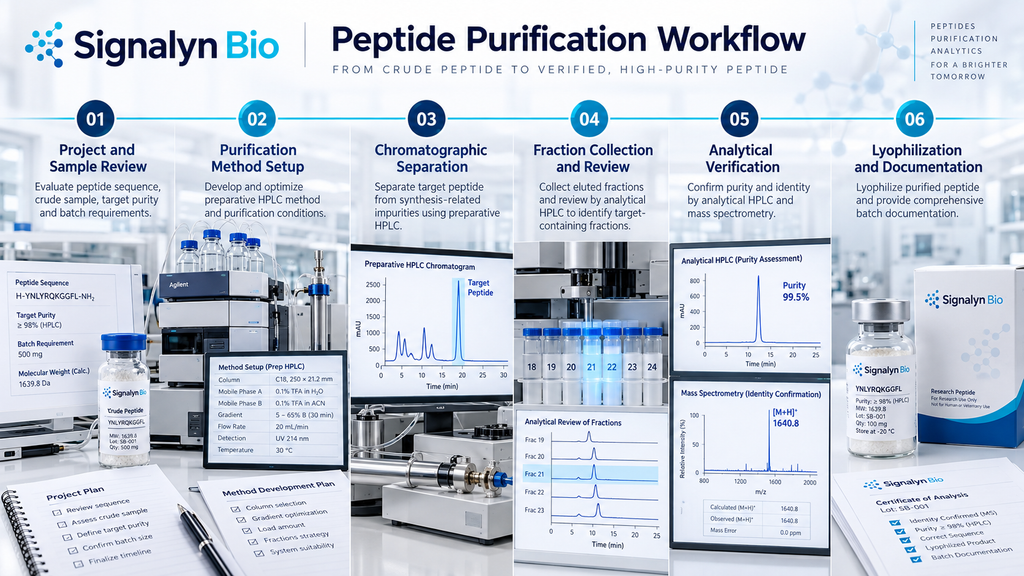
Project & Sample Review
Review peptide sequence, crude material, batch size, target purity, and downstream analytical or format requirements.
Purification Method Setup
Select and adjust chromatographic conditions according to sample behavior, separation needs, and project scope.
Chromatographic Separation
Separate target peptide material from synthesis-related impurities using the selected purification workflow.
Fraction Collection & Review
Collect selected fractions and review their chromatographic performance before pooling or additional processing.
Analytical Verification
Use analytical HPLC and, where applicable, mass spectrometry to review purity and support identity verification.
Lyophilization & Documentation
Move purified material into final processing, batch documentation, packaging, and storage according to project requirements.
PURIFICATION VS ANALYTICAL HPLC
Preparative Purification and Analytical HPLC Serve Different Roles
Purification HPLC is used to separate and collect material. Analytical HPLC is used to evaluate the chromatographic profile of a sample. Keeping those roles separate helps avoid confusing the manufacturing step with the final analytical result.
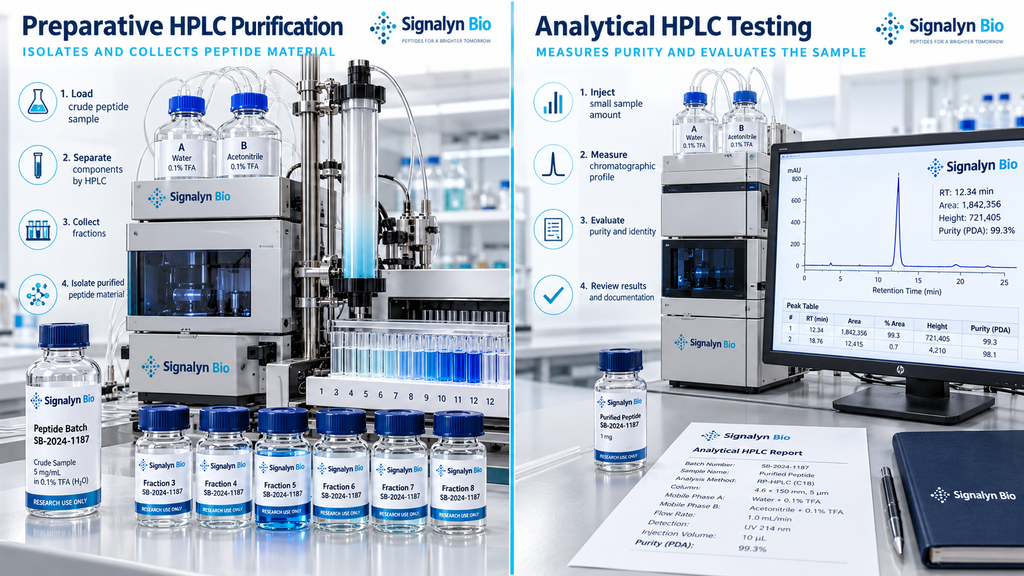
Peptide Purification
Primary purpose: separation and collection.
Used to isolate target peptide material from crude synthesis-related components and collect selected fractions for further processing.
HPLC Analysis
Primary purpose: measurement and review.
Used to evaluate chromatographic purity, peak profile, and sample characteristics under the stated analytical method.
A high HPLC purity percentage should still be interpreted together with identity, content, composition, and batch documentation. Read the Peptide Purity Guide →
POST-PURIFICATION SUPPORT
From Purified Material to Final Batch Documentation
Analytical Testing
Analytical HPLC and mass spectrometry can support purity review and molecular identity verification after purification.
Lyophilization
Purified material can be freeze-dried for downstream handling, packaging, storage, and final-format requirements.
Packaging
Vial format, bulk presentation, labeling, batch identification, and project-specific packaging can be discussed.
Certificate of Analysis
Batch-specific analytical results and identification information can be summarized in the available documentation package.
PEPTIDE PURIFICATION FAQ
Frequently Asked Questions About Peptide Purification
What is peptide purification?
Peptide purification is the downstream separation of target peptide material from synthesis-related impurities and other components in the crude sample.
Why is HPLC used for peptide purification?
Preparative HPLC can separate compounds according to chromatographic behavior, allowing selected fractions containing the target material to be collected for further processing.
What affects how difficult a peptide is to purify?
Sequence length, hydrophobicity, charge, amino-acid composition, crude-sample complexity, batch size, and the target purity can all influence the purification workflow.
Is purification HPLC the same as analytical HPLC?
No. Preparative purification focuses on separation and collection, while analytical HPLC focuses on measuring and reviewing the chromatographic profile of a sample.
Can purified peptide material be lyophilized?
Yes. Purified material can move into lyophilization and final processing according to the product format, handling, packaging, and project requirements.
What documentation can be provided after purification?
Available documentation can include HPLC data, mass spectrometry records, purity information, batch identification, and Certificate of Analysis information according to the testing scope.
START A PURIFICATION PROJECT
Discuss Your Peptide Purification Requirements
Share the peptide, crude material or synthesis stage, target purity, quantity, analytical requirements, and final-format needs for your project.