
PEPTIDE ANALYTICAL TESTING SERVICES
Peptide Analytical Testing Services for Purity, Identity & Batch Review
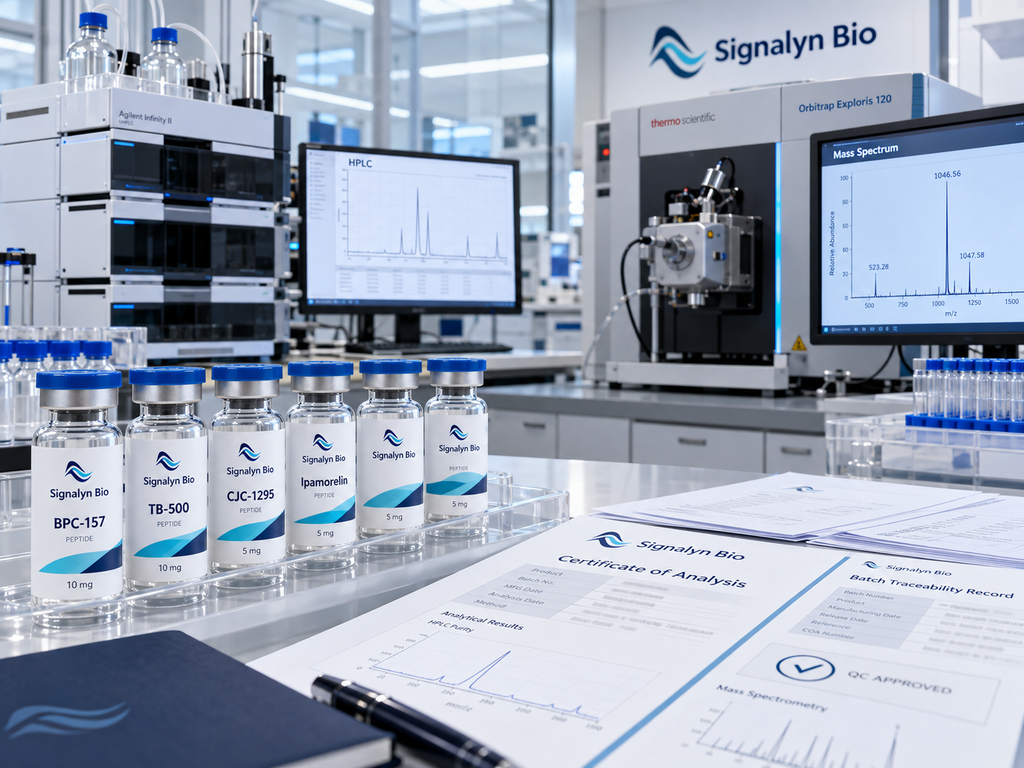
Signalyn Bio provides peptide analytical testing services to support chromatographic purity assessment, molecular identity verification, batch-level review, and project-specific documentation requirements.
Testing can be integrated with custom synthesis, purification, lyophilization, packaging, and bulk manufacturing workflows, with the analytical scope defined according to the peptide, batch, project stage, and quality questions that need to be answered.
TESTING CAPABILITIES
Peptide Analytical Testing Capabilities
Different methods answer different quality questions. The testing plan should therefore be built around what needs to be verified rather than relying on one result alone.
HPLC Analysis
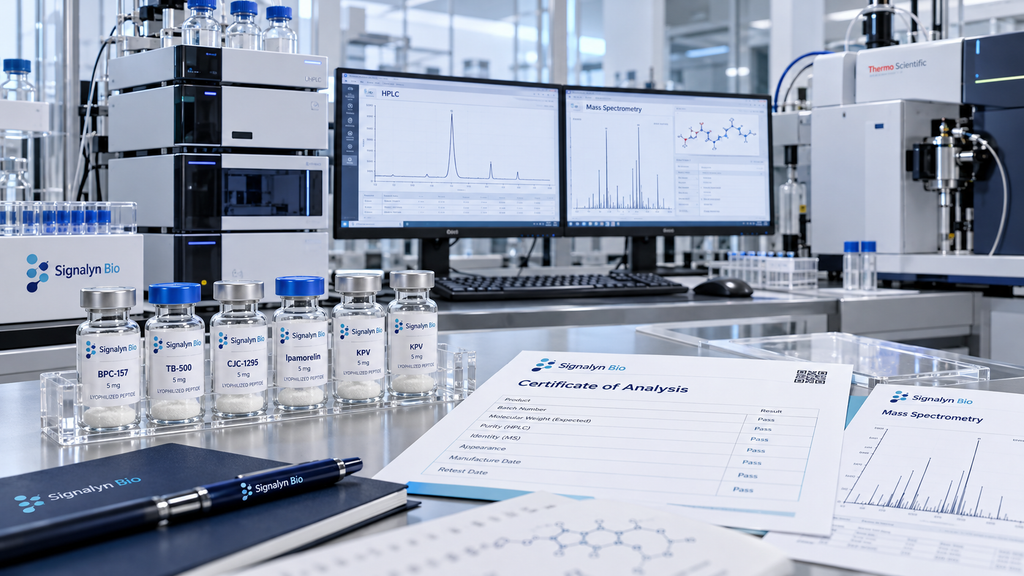
Supports chromatographic purity assessment, peak-profile review, and comparison of batch-level analytical performance.
Mass Spectrometry
Supports molecular identity verification by comparing observed mass information with the expected peptide.
Batch-Level Review
Testing results can be tied to the relevant batch, sample ID, specifications, and supporting documentation.
Certificate of Analysis
Available analytical results can be summarized in batch-specific COA documentation according to the testing scope.
Third-Party Verification
Independent testing can provide an additional verification layer when external analytical confirmation is requested.
Analytical Documentation
Chromatograms, mass spectra, batch IDs, test records, and COA information can be organized for project review and traceability.
WHAT EACH TEST ANSWERS
Purity, Identity & Documentation Answer Different Questions
A strong analytical testing plan starts by defining the question first. HPLC, mass spectrometry, and documentation review provide complementary—not interchangeable—evidence.
How Pure Is the Chromatographic Profile?
HPLC supports chromatographic purity assessment and peak-profile review under the stated method conditions.
It does not by itself prove: molecular identity, actual peptide content, sterility, or full batch traceability.
Does the Observed Mass Support Identity?
Mass spectrometry supports molecular identity review by comparing observed mass information with the expected peptide.
It does not replace: chromatographic purity assessment, quantitative content testing, or batch documentation.
How Are the Results Tied to the Batch?
COA and batch documentation help summarize the analytical results, sample identity, and traceability context.
A summary is strongest when: the underlying analytical records are available for review.
For a deeper explanation of why a high HPLC percentage is only one part of peptide quality, see the Peptide Purity Guide.
ANALYTICAL TESTING WORKFLOW
Typical Peptide Analytical Testing Workflow
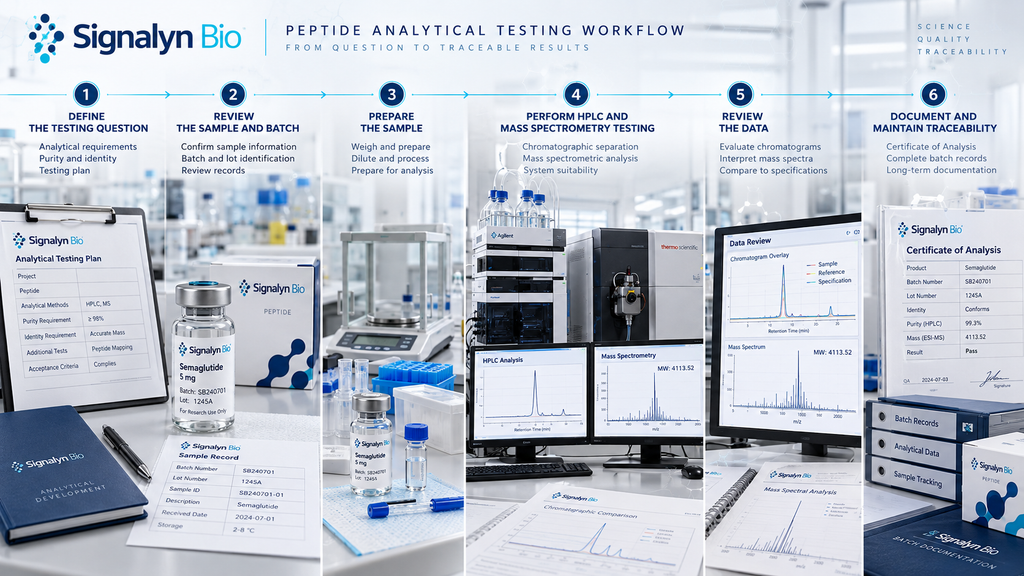
Define the Testing Question
Clarify whether the project needs purity assessment, identity verification, batch comparison, third-party confirmation, or another analytical objective.
Review the Sample & Batch
Record peptide name, batch or lot number, sample ID, quantity, project reference, and relevant specification.
Prepare the Sample
Prepare the material according to the selected analytical method, sample condition, and project-specific testing requirements.
Perform HPLC / MS Testing
Run the selected chromatographic and identity-related methods according to the defined analytical scope.
Review the Data
Review chromatograms, spectra, reported results, method context, and any unusual findings before documentation is finalized.
Document & Maintain Traceability
Connect analytical results with the correct batch, sample identifiers, COA, and supporting project records.
WHEN TO USE WHICH TEST
Choosing the Right Analytical Evidence for the Project
| Quality Question | Primary Evidence | Typical Supporting Record |
|---|---|---|
| What is the chromatographic purity? | HPLC | Chromatogram + peak table |
| Does the observed mass support the intended peptide? | Mass spectrometry | Mass spectrum |
| Which batch was tested? | Batch identification | Sample ID / lot record |
| How are results summarized for review? | Certificate of Analysis | COA + supporting data |
| Is independent confirmation required? | Third-party testing | External laboratory report |
| How do the records connect to supplied material? | Traceability review | Batch / packaging / analytical records |
INTEGRATED MANUFACTURING SUPPORT
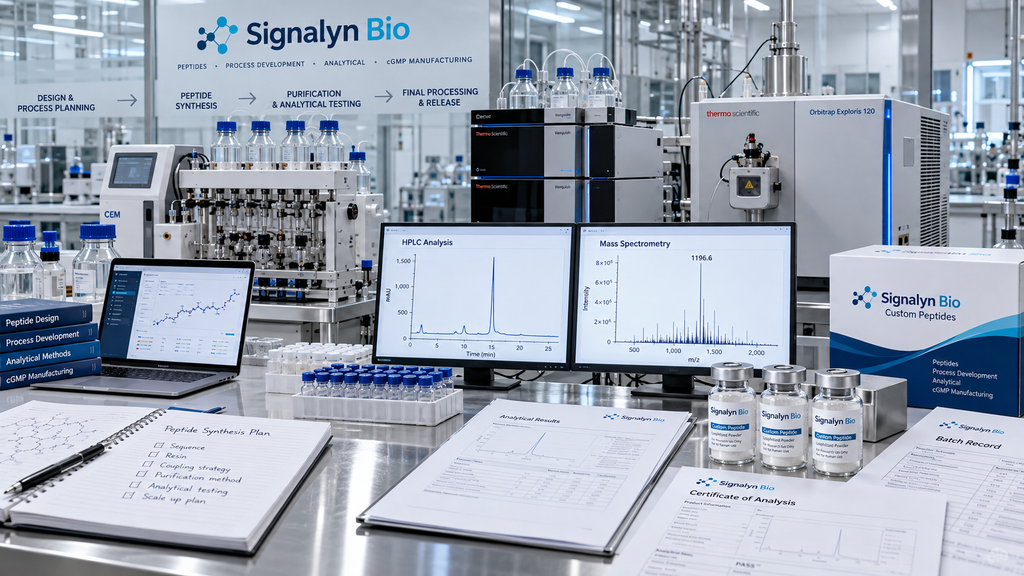
Analytical Testing Across the Peptide Manufacturing Workflow
Custom Peptide Synthesis
Testing can support review of synthesized material before or after downstream purification.
Peptide Purification
Analytical HPLC can support fraction review and post-purification assessment.
Lyophilization
Final material can remain linked to analytical and batch records through downstream processing.
Packaging & Documentation
Batch identifiers and analytical results can be connected to final packaging and project documentation.
PEPTIDE ANALYTICAL TESTING FAQ
Frequently Asked Questions About Peptide Analytical Testing
What is peptide analytical testing?
Peptide analytical testing uses appropriate analytical methods to evaluate characteristics such as chromatographic purity, molecular identity, batch consistency, and supporting quality documentation.
Which test is used for peptide purity?
HPLC is commonly used to support chromatographic purity assessment and peak-profile review under defined method conditions.
Which test is used for peptide identity?
Mass spectrometry can support molecular identity verification by comparing observed mass information with the expected peptide.
Does 99% HPLC purity prove the peptide is correct?
No. A high HPLC area percentage does not by itself prove molecular identity, actual peptide content, composition, or full batch traceability.
Can analytical testing be performed on a specific production batch?
Yes. Analytical results can be associated with batch and sample identifiers to support batch-level review and documentation.
Can independent laboratory testing be included?
Yes. Third-party testing can be discussed when independent verification is needed for the project.
START AN ANALYTICAL TESTING PROJECT
Discuss Your Peptide Analytical Testing Requirements
Share the peptide, batch or sample ID, quantity, testing question, analytical methods, and documentation requirements for your project.