
PEPTIDE LYOPHILIZATION
Peptide Lyophilization Services for Controlled Freeze-Drying & Final Processing
Signalyn Bio provides peptide lyophilization services designed to support dry-format peptide preparation, downstream handling, packaging, storage, and batch-level project requirements.
Lyophilization can be integrated with custom synthesis, purification, analytical testing, and packaging so the freeze-drying step remains connected to peptide characteristics, batch size, formulation, and final project format.
Controlled Freeze-Drying
Process-focused preparation
Flexible Batch Support
Research to larger-volume projects
Testing & Packaging
Integrated final processing
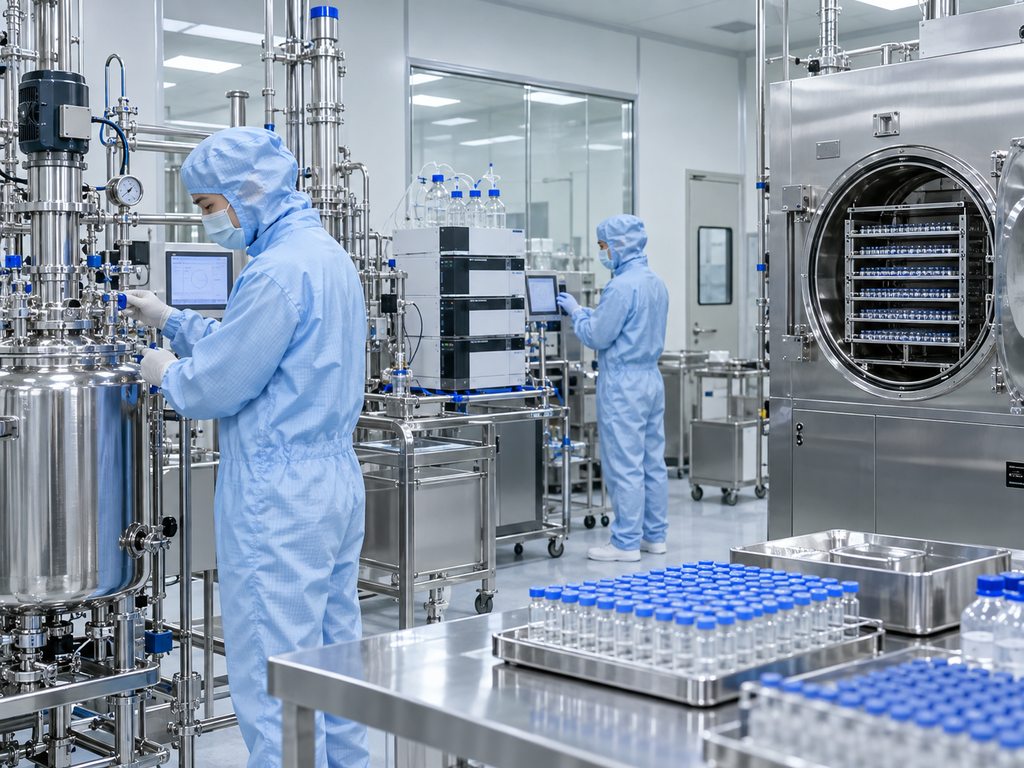
LYOPHILIZATION CAPABILITIES
Freeze-Drying Configured Around Peptide & Project Requirements
Lyophilization conditions can vary according to peptide properties, formulation, batch size, analytical requirements, packaging, and downstream handling.
Process Planning
Review peptide characteristics, formulation, batch size, target format, and project requirements before freeze-drying begins.
Controlled Freeze-Drying
Controlled freezing and drying steps support water removal while preparing peptide material for downstream handling, packaging, and storage.
Batch Flexibility
Lyophilization workflows can support different project scales, from research requirements to larger-volume manufacturing projects.
Post-Lyophilization Testing
Analytical testing can be integrated after lyophilization to support purity assessment, molecular identity review, and batch documentation.
Packaging Integration
Final material can move into bulk or vial packaging, labeling, batch identification, and project-specific handling requirements.
Quality Documentation
Batch-specific analytical records and supporting documentation can support review, traceability, and project communication.
WHY PROCESS CONTROL MATTERS
Peptide Lyophilization Is More Than Simply “Drying” a Sample
Freeze-drying is a controlled process. Freezing behavior, pressure, temperature, drying stages, formulation, and final moisture exposure can all influence process planning and final handling.
Freezing Behavior
The initial freezing stage establishes the frozen matrix that will be processed during primary drying.
Primary Drying
Primary drying removes frozen water under reduced pressure while maintaining controlled process conditions.
Secondary Drying
Secondary drying further reduces residual moisture according to the process and final material requirements.
Moisture Exposure
After lyophilization, packaging and handling should help limit unnecessary moisture exposure and protect the intended final format.
Lyophilization should be evaluated in the context of the peptide, formulation, batch size, final format, packaging, and downstream handling—not as an isolated drying step.
CYCLE DEVELOPMENT & SCALE TRANSFER
From Small-Batch Freeze-Drying to Larger Peptide Projects
A lyophilization cycle that performs well at one batch size should not automatically be assumed to behave identically at another scale. Load pattern, vial configuration, fill volume, heat transfer, chamber conditions, and final material requirements can all affect process planning.
Batch Load & Vial Pattern
Vial count, shelf loading, spacing, bulk configuration, and fill geometry can influence heat and mass transfer through the batch.
Process Condition Review
Freezing behavior, shelf temperature, chamber pressure, drying duration, and stage transitions should be reviewed in the context of the actual project scale.
Final Material Requirements
Dry format, cake appearance, residual moisture expectations, packaging, storage, and downstream analytical review can influence how the cycle is planned and assessed.
Research-Scale Projects
Smaller projects can be used to establish process understanding, evaluate final format, and define downstream testing requirements.
Larger Manufacturing Projects
Projects moving into larger-volume manufacturing may require additional review of loading, process conditions, final handling, packaging, and analytical documentation.
Integrated Downstream Support
Post-lyophilization testing, packaging, batch identification, and documentation can remain connected to the same project workflow.
LYOPHILIZATION WORKFLOW
Typical Peptide Lyophilization Workflow
A structured workflow connects process planning, controlled freezing, drying stages, analytical review, and final packaging.
01
Process Review
Review peptide characteristics, formulation, batch size, target format, and downstream requirements.
02
Freezing
Prepare and freeze peptide material under controlled conditions as the first stage of the process.
03
Primary Drying
Remove frozen water under reduced pressure while maintaining controlled drying conditions.
04
Secondary Drying
Further reduce residual moisture according to process and final material requirements.
05
Testing & Packaging
Review final material as required, organize documentation, and prepare project-specific packaging.
PACKAGING & STORAGE
Final Handling After Lyophilization
After freeze-drying, packaging, moisture protection, storage, and batch identification become part of the final project workflow.
Packaging Format
Lyophilized peptide material can be prepared in project-specific bulk or vial formats according to quantity, labeling, handling, and delivery needs.
Moisture Protection
Packaging and handling should help limit unnecessary moisture exposure after the drying process is complete.
Batch Identification
Batch-specific identification can connect final material with analytical data, packaging, documentation, and project records.
ANALYTICAL DOCUMENTATION
Analytical Review After Lyophilization
Depending on project requirements, final lyophilized material can be reviewed using analytical data and batch documentation to support purity, identity, and traceability.

HPLC Analysis
Chromatographic analysis can support purity assessment and batch-level review of final peptide material after lyophilization.
Mass Spectrometry
Mass spectrometry can support molecular identity verification and complementary analytical characterization of the final material.
Certificate of Analysis
Batch-specific documentation can summarize analytical results, purity information, sample identification, and relevant quality data.
POST-LYOPHILIZATION REVIEW
What to Review After Peptide Lyophilization
Freeze-drying creates the final dry-format material, but project review should continue into analytical evidence, physical presentation, packaging, storage, and batch traceability.
Confirm that the lyophilized material remains associated with the correct batch or sample identifiers.
Review the final dry material and packaging condition according to the agreed project requirements.
Use analytical HPLC where required to review chromatographic purity of the final material. Explore HPLC Analysis →
Use mass spectrometry where required to support molecular identity review. Explore Mass Spectrometry →
Confirm vial or bulk configuration, label fields, batch information, and final project presentation. Explore Peptide Packaging →
Connect analytical records, sample identification, packaging records, and available COA documentation to the final batch. Explore Certificate of Analysis →
PEPTIDE LYOPHILIZATION FAQ
Common Questions About Peptide Lyophilization
What is peptide lyophilization?
Peptide lyophilization is a controlled freeze-drying process in which frozen water is removed under reduced pressure, followed by additional drying to reduce residual moisture according to selected process conditions.
What factors can influence the process?
Peptide characteristics, formulation, batch size, freezing behavior, temperature, pressure, drying stages, packaging, and downstream handling can influence process planning.
Can lyophilized peptide material be analytically tested?
Yes. Depending on project requirements, HPLC and mass spectrometry can be used after lyophilization to support chromatographic purity assessment and molecular identity review.
Can lyophilization be integrated with packaging?
Yes. Final lyophilized material can be prepared for project-specific bulk or vial packaging, labeling, batch identification, storage, and delivery requirements.
START YOUR LYOPHILIZATION PROJECT
Discuss Your Peptide Lyophilization Requirements
Share your peptide, formulation, batch size, analytical requirements, packaging format, destination, and project details with our team.