
PEPTIDE MANUFACTURING GUIDE
Peptide Manufacturing Process: From Synthesis to Final Documentation
A practical guide to the peptide manufacturing process, from project review and synthesis through purification, lyophilization, analytical testing, packaging, and final batch documentation.
Designed for research teams, biotechnology companies, distributors, and procurement professionals evaluating how a peptide project is planned, manufactured, tested, and documented.
PROCESS OVERVIEW
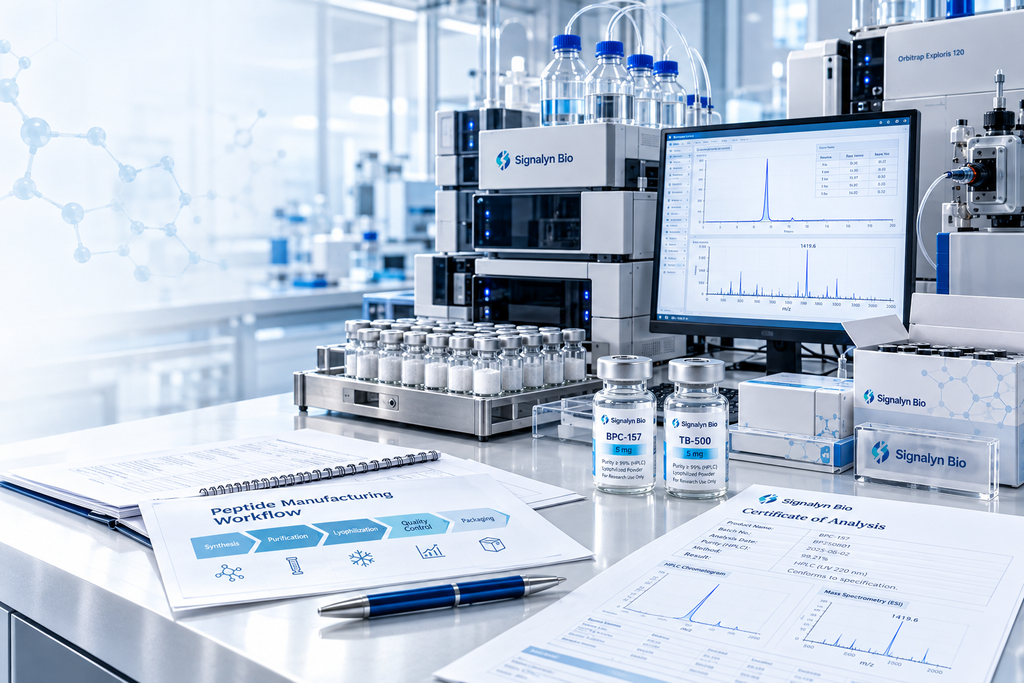
Overview of the Peptide Manufacturing Process
Peptide manufacturing is an integrated workflow. The exact route depends on sequence complexity, target purity, production scale, analytical requirements, final format, packaging, and documentation needs.
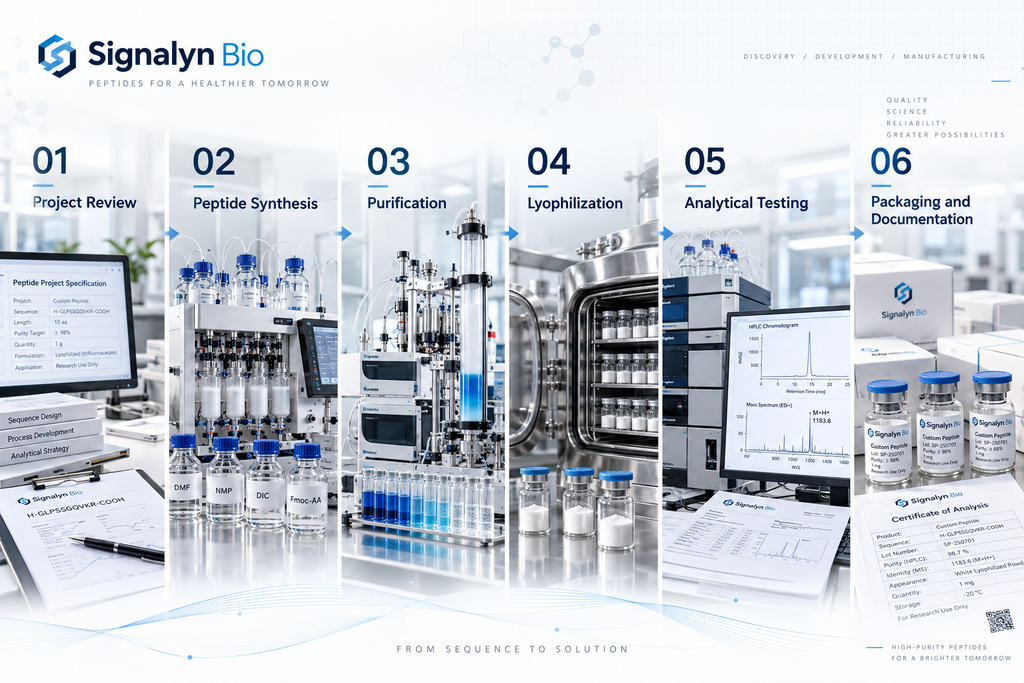
Project Review
Sequence, target purity, required quantity, analytical scope, final format, packaging, and documentation requirements are reviewed before manufacturing begins.
Peptide Synthesis
The target sequence is produced according to the selected synthesis strategy and project-specific requirements.
Purification
Purification separates target peptide material from synthesis-related impurities and supports the required purity specification.
Lyophilization
Purified peptide material can be freeze-dried to support handling, packaging, storage, and project-specific final-format requirements.
Analytical Testing
HPLC and mass spectrometry can support chromatographic purity assessment, molecular identity verification, and batch-level analytical review.
Packaging & Documentation
Final material can be packaged, batch-identified, documented, and prepared according to the agreed project requirements.
PROJECT PLANNING
Key Factors That Affect Peptide Manufacturing
Peptide manufacturing requirements can vary significantly from one project to another. Early alignment on sequence, purity, quantity, testing, and packaging reduces avoidable revisions later in the process.
Sequence Length & Complexity
Longer sequences, difficult amino acid compositions, hydrophobic regions, and structural complexity can influence synthesis strategy, yield, purification behavior, and analytical requirements.
Target Purity
Higher purity targets may require additional purification, method optimization, fraction review, and more detailed analytical evaluation.
Production Scale
Research-scale and larger-volume projects can require different process planning, purification capacity, solvent usage, downstream handling, and packaging workflows.
Peptide Modifications
Selected modifications can affect synthesis planning, purification behavior, expected molecular mass, salt form, and analytical characterization.
Analytical Requirements
HPLC, mass spectrometry, third-party testing, assay, and other project-specific testing requirements can influence the final quality and documentation package.
Packaging & Final Format
Lyophilized format, vial fill, bulk packaging, labels, batch identification, storage, handling, and delivery requirements should be defined early.
SYNTHESIS & SCALE-UP
Peptide Synthesis & Scale-Up Considerations
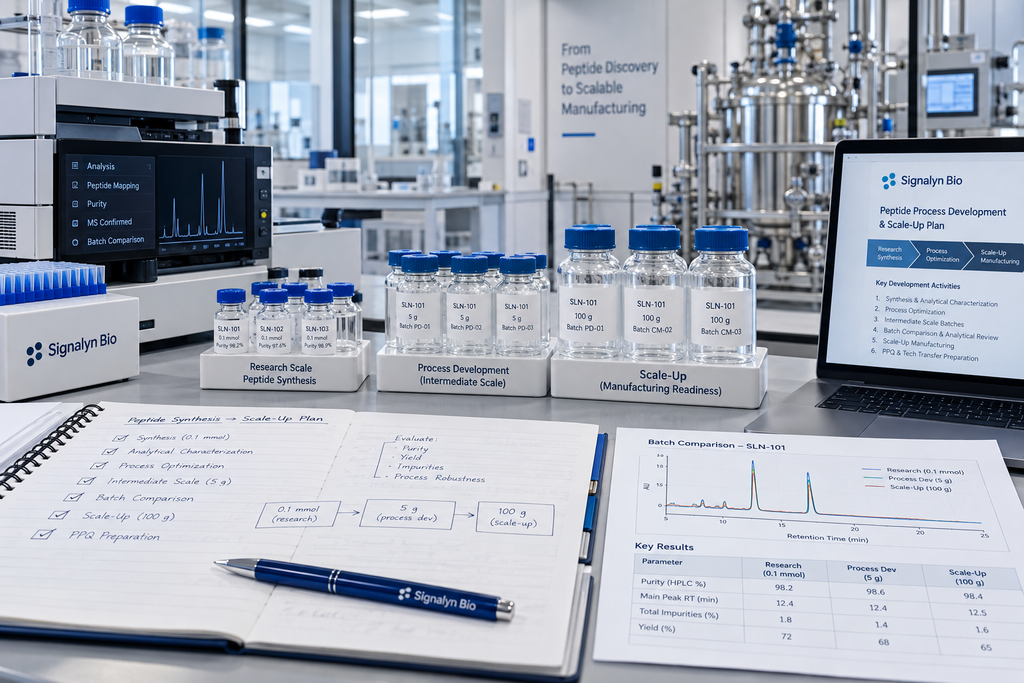
Moving from research-scale synthesis to larger-volume manufacturing is not simply a matter of producing more material. Process conditions, purification capacity, analytical consistency, and final handling all need to remain aligned with the agreed specification.
Research-Scale Synthesis
Early-stage projects often focus on sequence feasibility, target purity, analytical characterization, and small-batch requirements.
Scale-Up Planning
Increasing production scale may require review of synthesis efficiency, raw-material needs, purification capacity, fraction collection, and downstream processing.
Analytical Consistency
HPLC and mass spectrometry can support comparison of analytical characteristics across batches during scale-up.
For larger-volume projects, see our Bulk Peptide Manufacturing page.
PURIFICATION & PURITY CONTROL
Peptide Purification & Purity Control
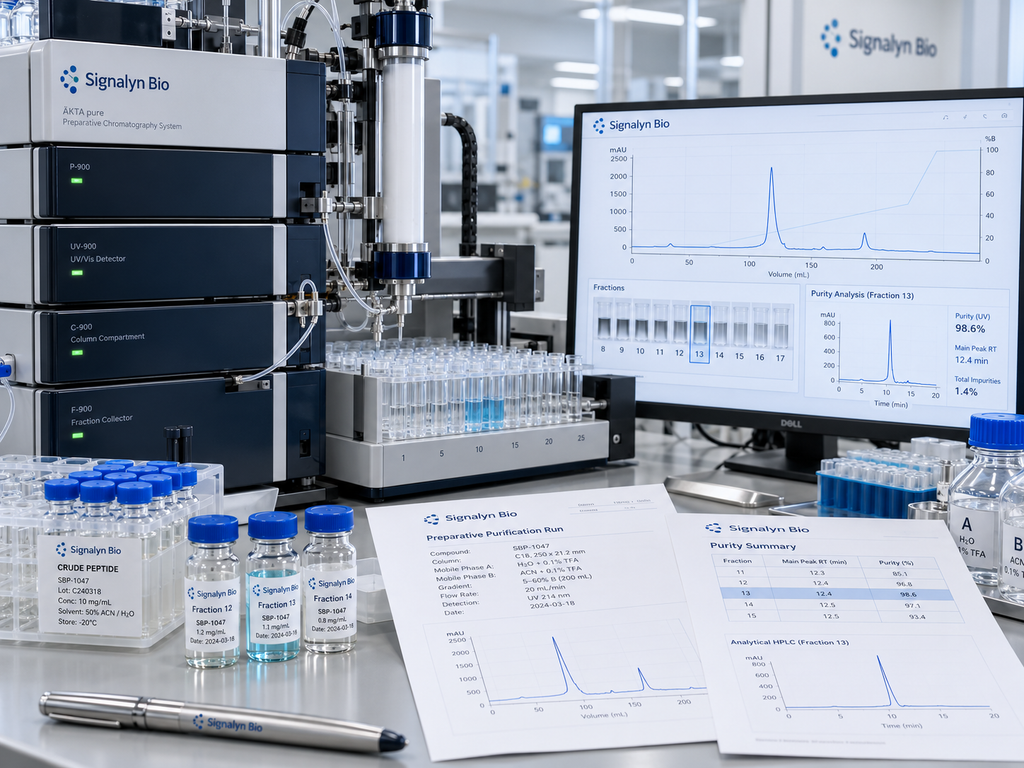
Crude synthesis material can contain target peptide together with synthesis-related impurities and other components. Purification strategy therefore plays a central role in meeting the project’s purity specification.
Purification Strategy
Purification conditions are selected according to peptide characteristics, sample complexity, batch size, and target purity requirements.
Fraction Evaluation
Collected fractions can be reviewed and combined according to chromatographic performance and project-specific purity requirements.
Purity Verification
Analytical HPLC can support assessment of the final chromatographic profile and reported peptide purity.
Target purity should be defined in context. A high HPLC percentage alone does not establish identity, actual peptide content, salt or moisture composition, or batch traceability. See the Peptide Purity Guide.
FINAL PROCESSING
Lyophilization, Packaging & Final Processing
After purification, peptide material can move through lyophilization, final analytical review, packaging, labeling, and documentation before project completion.
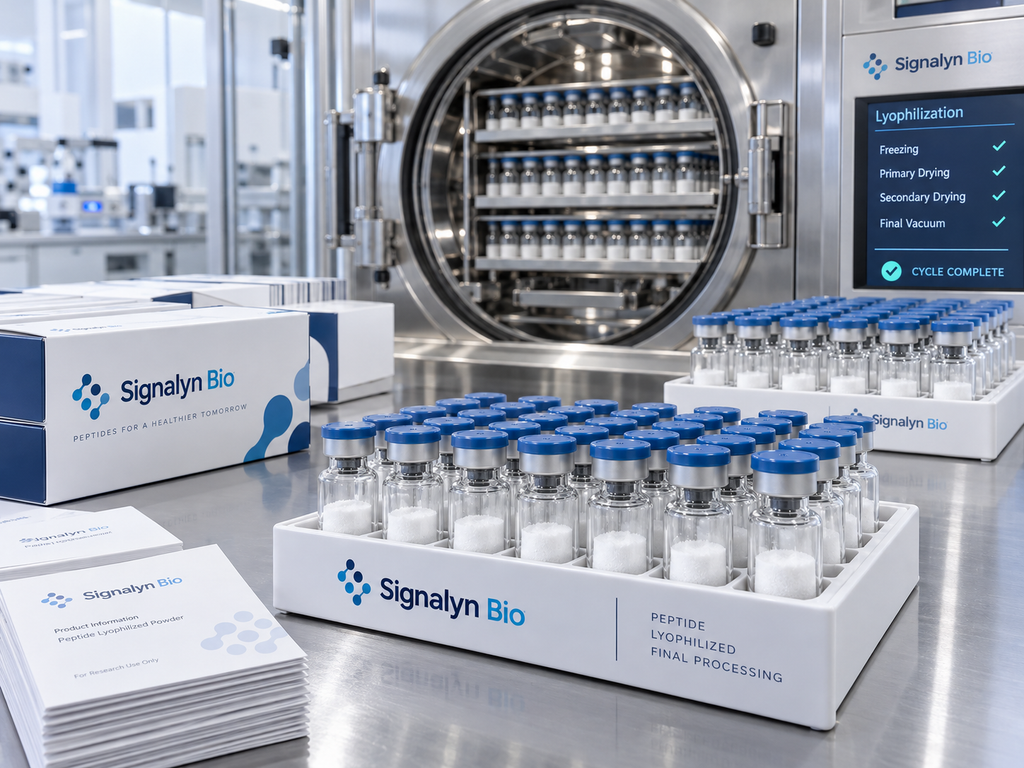
Lyophilization
Controlled freeze-drying can support stable peptide powder preparation, downstream handling, storage, and packaging requirements.
Packaging Configuration
Vial format, multi-vial cartons, bulk packaging, label fields, quantity, and handling requirements can be selected according to the project.
Batch Identification
Batch-specific identification connects the final packaged material with analytical results, manufacturing records, and supporting documentation.
QUALITY CONTROL
Quality Control & Analytical Testing in Peptide Manufacturing
Analytical testing connects manufacturing, purification, final processing, and batch documentation by providing evidence for purity review, molecular identity verification, and project-specific quality assessment.
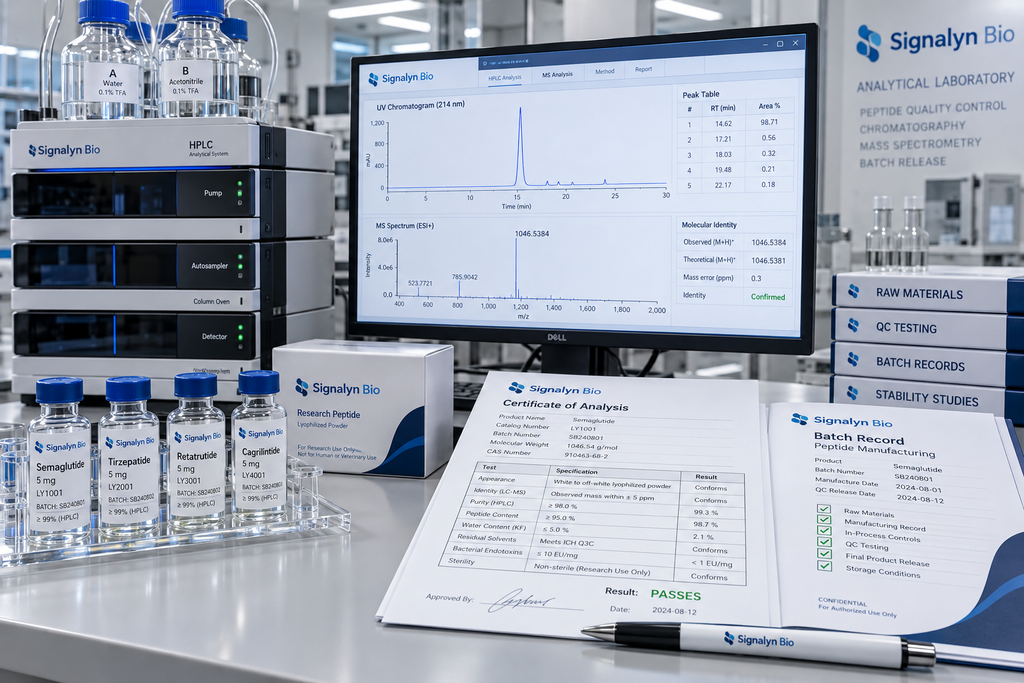
HPLC Analysis
Supports chromatographic purity assessment, sample-profile review, and batch-level analytical evaluation.
Mass Spectrometry
Supports molecular identity verification and analytical characterization of peptide material.
Certificate of Analysis
Batch-specific COA documentation can summarize purity information, identity results, sample identification, and relevant quality data.
No single analytical result provides a complete picture of peptide quality. Purity, molecular identity, batch records, and supporting documentation are most useful when reviewed together.
DOCUMENTATION & TRACEABILITY
Peptide Manufacturing Documentation & Traceability
Clear documentation connects manufacturing, analytical testing, packaging, and final batch review into a traceable project record.
Batch Identification
Batch and sample identifiers connect manufacturing records, analytical results, packaging information, and final documentation.
Analytical Records
HPLC chromatograms, mass spectrometry data, and other analytical records provide supporting evidence for batch-level review.
Supporting Project Records
Packaging details, specifications, test information, third-party reports, and other available records can be included according to project scope.
PEPTIDE MANUFACTURING FAQ
Frequently Asked Questions About Peptide Manufacturing
What information is needed to start a peptide manufacturing project?
Typical project information includes the peptide sequence or product name, target purity, required quantity, analytical testing needs, final format, packaging, and documentation requirements.
Can peptide manufacturing be scaled from research quantities to larger batches?
Yes. Scale-up can be reviewed according to synthesis feasibility, purification capacity, analytical requirements, downstream processing, packaging, and project specifications.
What analytical testing is commonly used in peptide manufacturing?
HPLC can support chromatographic purity assessment, while mass spectrometry can support molecular identity verification. Additional testing depends on the peptide and project scope.
Can peptides be supplied in lyophilized form?
Selected peptide projects can include lyophilization according to formulation, handling, storage, packaging, and project-specific requirements.
What documentation can be provided?
Available documentation may include Certificates of Analysis, HPLC data, mass spectrometry results, batch identification, packaging information, and other project-specific records.
DISCUSS YOUR PROJECT
Discuss Your Peptide Manufacturing Project
Share your peptide, target purity, quantity, analytical testing, packaging, and documentation requirements with our team.