
PEPTIDE SCIENCE & EDUCATION
Peptide Science: Structure, Sequence & Research Fundamentals
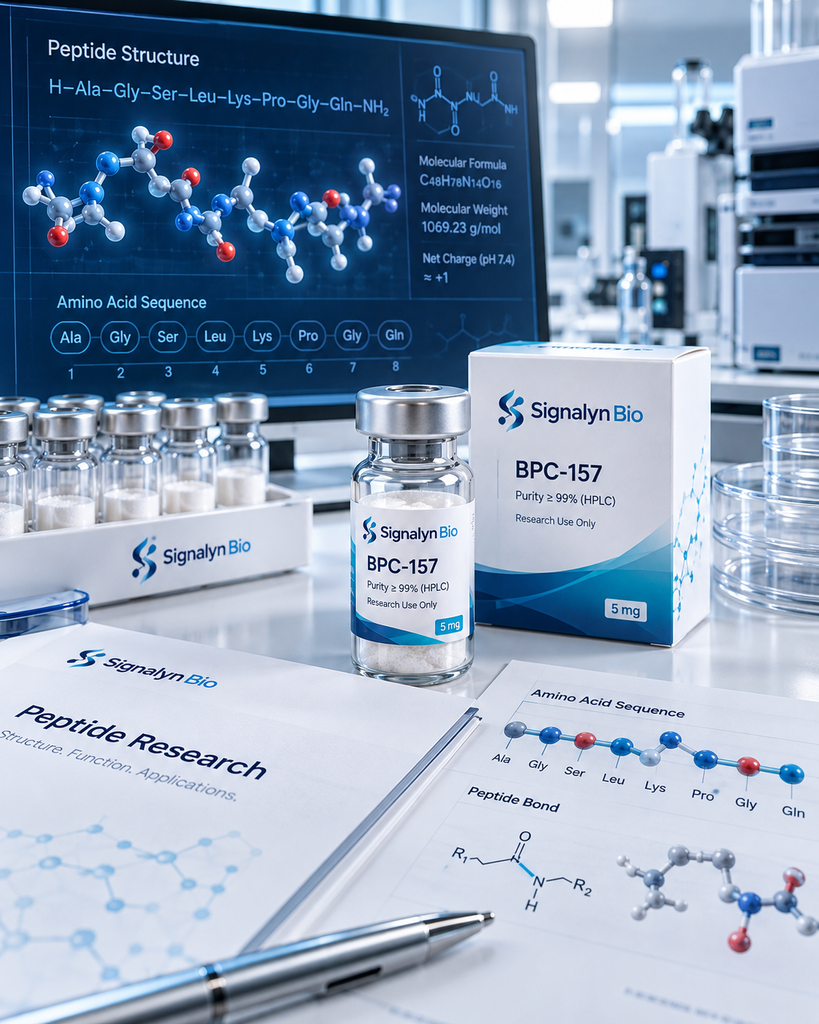
Signalyn Bio’s Peptide Science hub explains the foundational concepts behind peptide structure, amino-acid sequence, signaling, molecular properties, stability, synthesis, and research interpretation.
Use this page as the starting point for understanding peptide science, then continue into dedicated Manufacturing, Quality, and Product resources when you need deeper technical or supplier-evaluation guidance.
START WITH THE FUNDAMENTALS
Core Peptide Science Topics
These concepts form the scientific foundation for understanding how peptides are described, synthesized, analyzed, handled, and studied.
Structure & Sequence
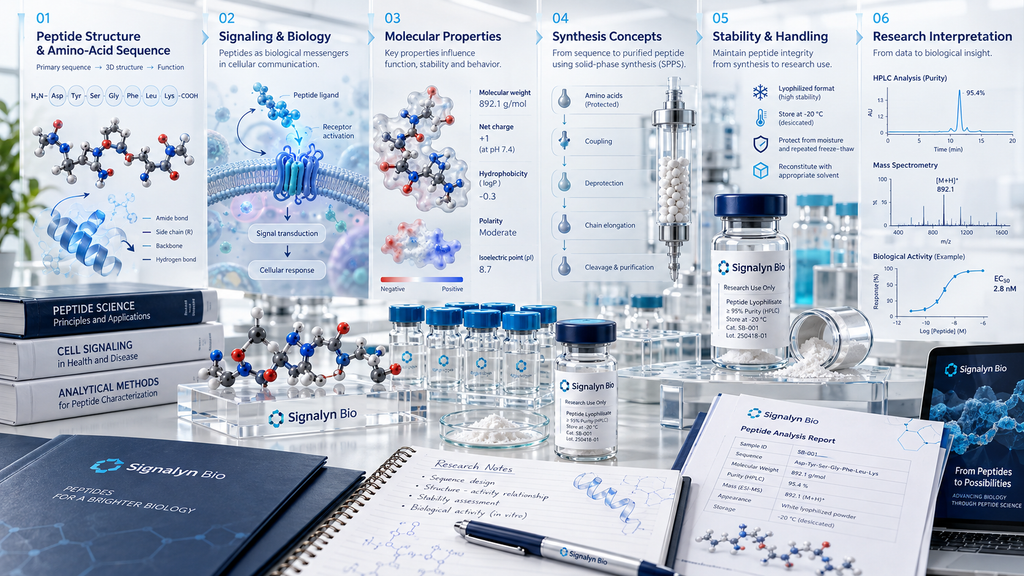
Learn how amino acids, peptide bonds, sequence length, charge, hydrophobicity, and modifications influence peptide properties.
Signaling & Biology
Understand how peptides can participate in receptor interactions, cellular signaling, and experimental research models.
Molecular Properties
Explore molecular weight, charge, solubility, hydrophobicity, sequence composition, and other properties relevant to peptide behavior.
Synthesis Concepts
Review the basic scientific ideas behind peptide synthesis, sequence assembly, purification, and downstream processing.
Stability & Handling
Understand how temperature, moisture, formulation, storage, and sample handling can affect peptide materials.
Research Interpretation
Separate molecular or experimental concepts from unsupported clinical or consumer claims when reviewing peptide research.
PEPTIDE SCIENCE FOUNDATIONS
A Practical Framework for Understanding Peptides
Peptides are amino-acid chains whose sequence and molecular characteristics influence how they behave in synthesis, purification, analysis, storage, and experimental systems.
What Is a Peptide?
A peptide is a chain of amino acids connected by peptide bonds. Sequence length and composition help determine molecular properties and research behavior.
Why Sequence Matters
The order of amino acids can influence molecular mass, charge distribution, hydrophobicity, conformation, and experimental interactions.
Why Context Matters
Peptide research should be interpreted within the specific experimental model, material specification, analytical scope, and study design.
FROM SCIENCE TO MANUFACTURING
How Peptide Science Connects to Manufacturing
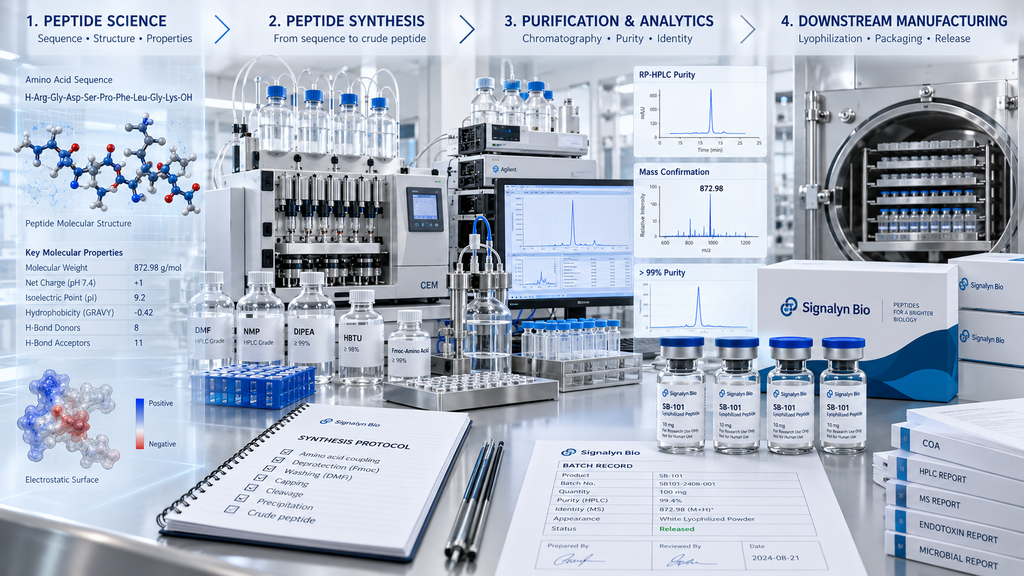
Scientific properties such as sequence length, amino-acid composition, hydrophobicity, charge, and target purity can influence manufacturing strategy and downstream handling.
Sequence → Synthesis
Sequence length and composition can influence synthesis planning, coupling efficiency, and process complexity.
Properties → Purification
Hydrophobicity, charge, sample complexity, and purity targets can influence purification strategy and chromatographic behavior.
Final Format → Handling
Lyophilization, packaging, storage, and documentation requirements connect downstream processing with the intended research workflow.
ANALYTICAL SCIENCE
Where Analytical Science Fits
Analytical methods are important in peptide research, but detailed quality interpretation belongs in Signalyn Bio’s dedicated Quality resources rather than on this general science hub.
HPLC Analysis
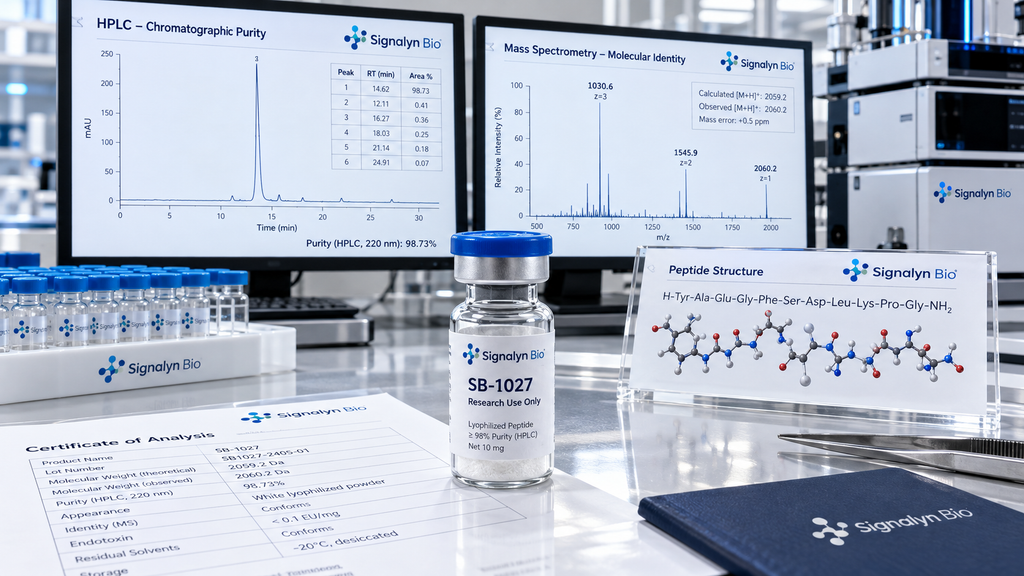
HPLC can support chromatographic purity and peak-profile review.
Mass Spectrometry
Mass spectrometry can support molecular identity verification.
Peptide Purity
Purity should be interpreted together with identity, content, composition, and batch traceability.
This page intentionally keeps quality-testing content brief. Detailed HPLC, mass spectrometry, COA, and batch-review guidance is maintained under the Quality & Analytical Support hub.
LATEST PEPTIDE SCIENCE
Latest Articles
-
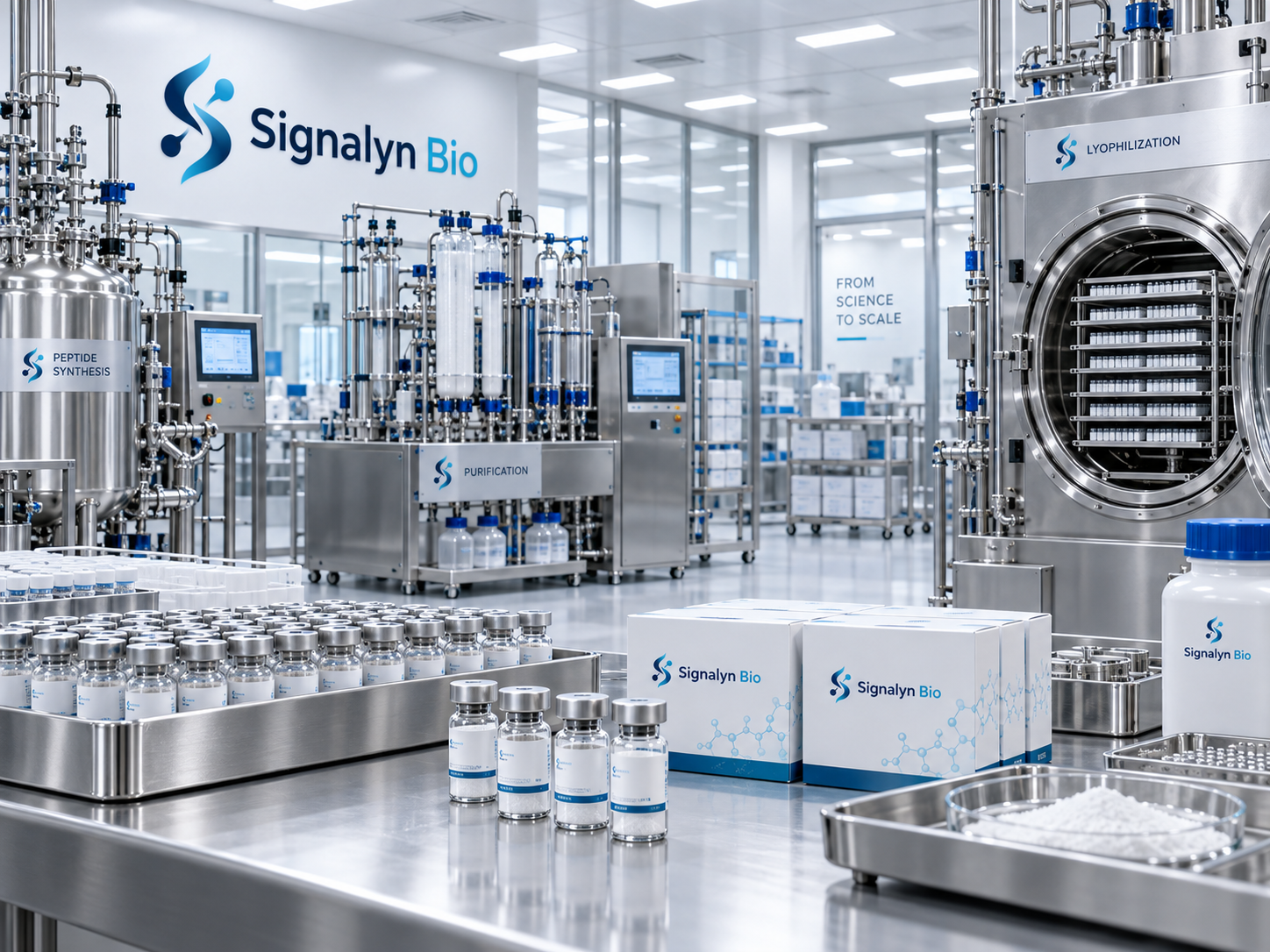
Custom Peptide Synthesis: How It Works, Pricing & Choosing a Manufacturer (2026)
When an off-the-shelf catalog peptide does not match your project — a novel sequence, a specific modification, a purity target, a custom format — custom peptide synthesis is…
-

Retatrutide Dosing Schedule: What Clinical Trials Used (2026)
Retatrutide is an investigational drug — not approved by the FDA or any regulator as of October 2026 — so there is no approved dosing schedule. What exists…
-

KPV Peptide for Inflammation: Benefits, Dosage & Guide
KPV is a three-amino-acid peptide — a fragment of the body’s own anti-inflammatory hormone α-MSH — that researchers study for its potent inflammation-calming effects, especially in the gut…
-
GHK-Cu Dosage Guide: What Research Studies Actually Use (2026)
GHK-Cu is not an approved drug — it is a cosmetic ingredient with published human skin studies, but there is no established human dose for injection and no…
-
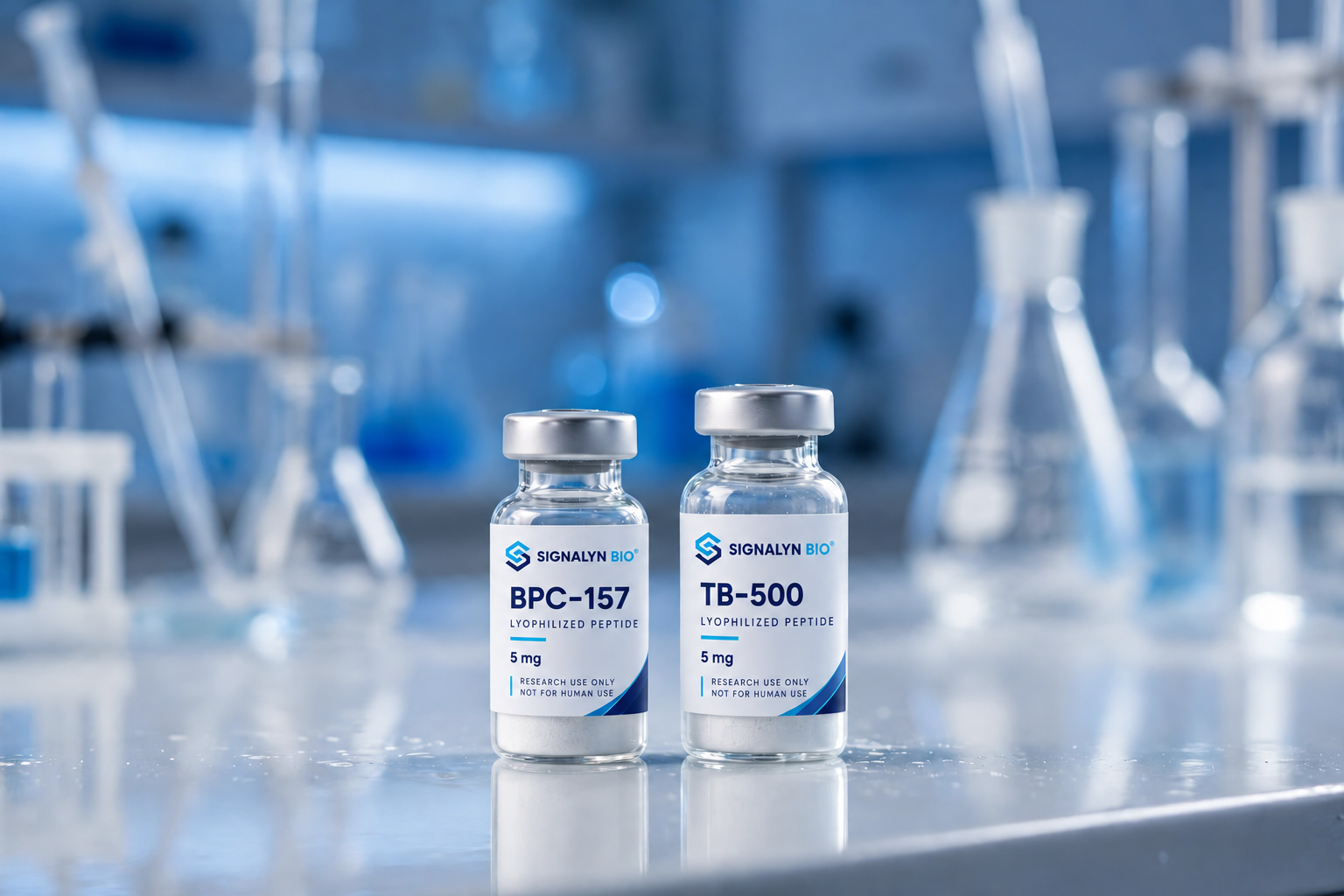
BPC-157 and TB-500: The “Wolverine Stack” Evidence Guide (2026)
Neither BPC-157 nor TB-500 is FDA-approved, and there is no established human dose for either — alone or combined. The “Wolverine Stack” is a community nickname for pairing…
-
BPC-157 Dosage Guide: What Research Studies Actually Use (2026)
BPC-157 has no approved human dose — it is not FDA-approved for any use, and no controlled human trial has established a dosing regimen. Every number in this…
MOST READ
Popular Peptide Science Articles
PEPTIDE SCIENCE → PROJECT SUPPORT
Need Help Applying Peptide Science to a Research Project?
Discuss peptide selection, synthesis, analytical requirements, packaging, documentation, or project-specific research needs with Signalyn Bio.