
QUALITY & ANALYTICAL SUPPORT
Peptide Quality Control & Analytical Support
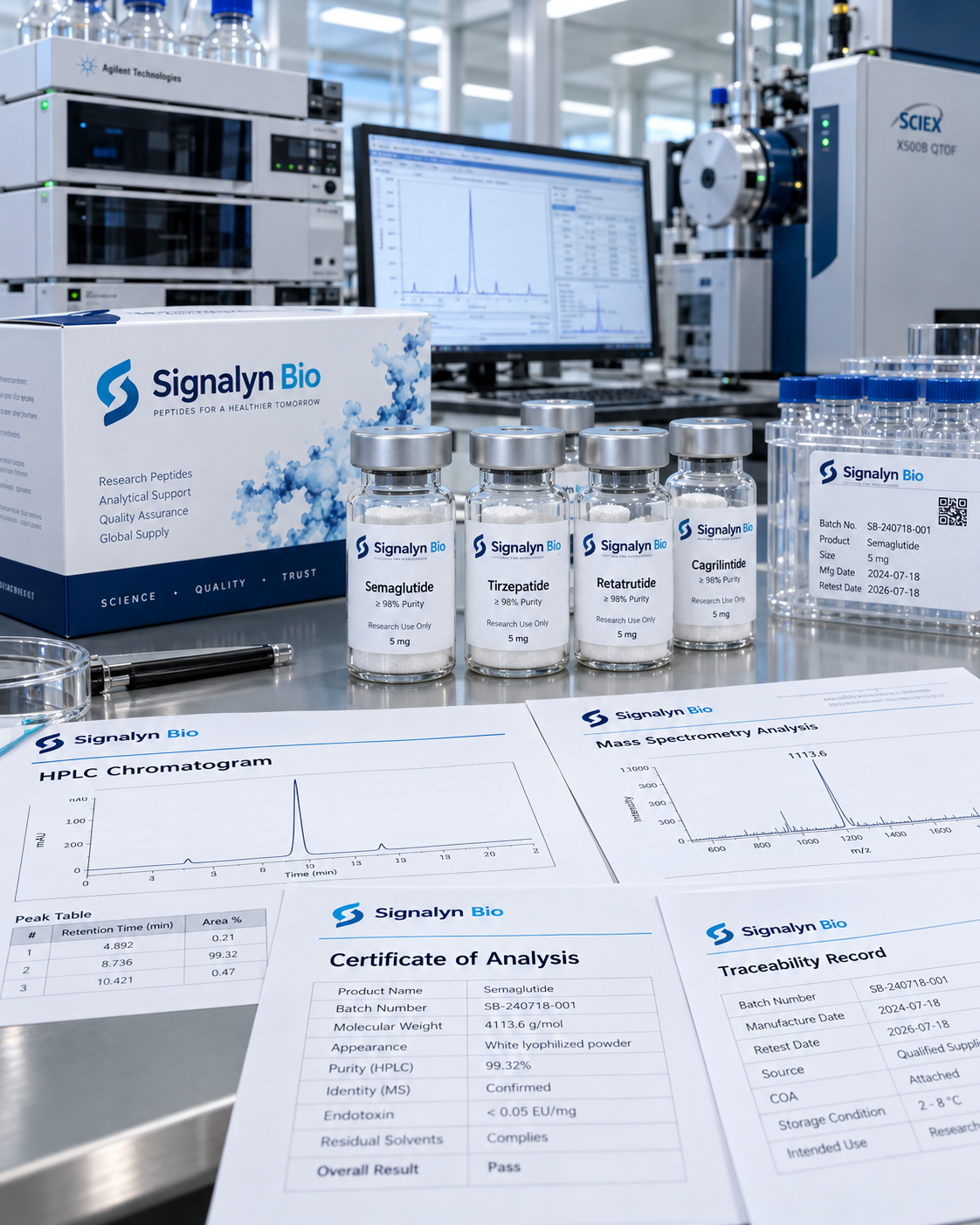
Signalyn Bio connects peptide quality review with chromatographic purity, molecular identity, batch documentation, third-party verification, and traceability across research and manufacturing projects.
The Quality hub is designed to help buyers and research teams understand what each analytical record can show, what it cannot prove alone, and how multiple forms of evidence fit together during supplier and batch evaluation.
CORE QUALITY EVIDENCE
Core Peptide Quality Control Evidence
Different analytical methods answer different quality questions. A complete supplier or batch review should avoid treating any single result as complete evidence on its own.
HPLC Analysis
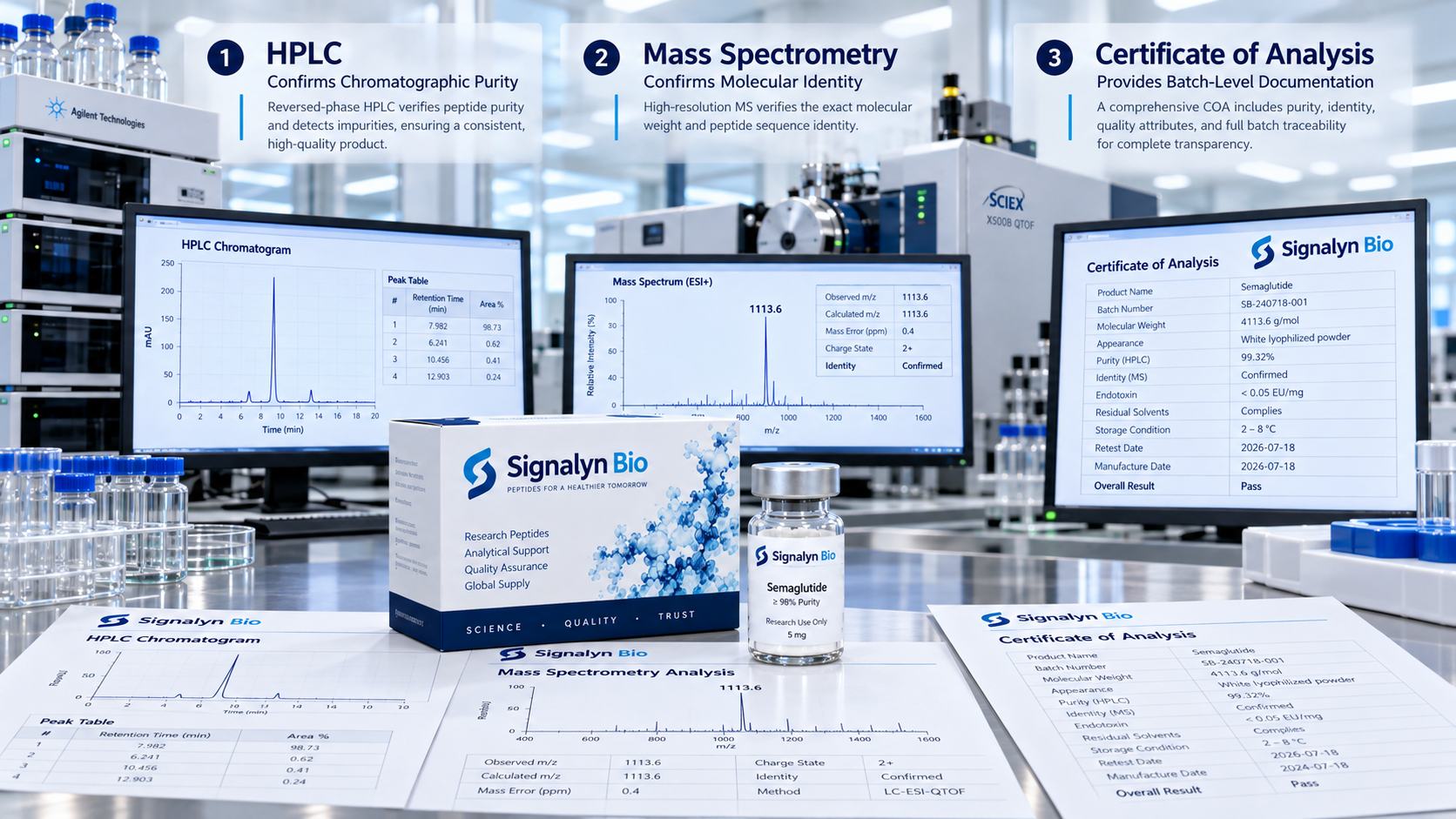
Supports chromatographic purity assessment, peak-profile review, and batch-level comparison under the stated method conditions.
Mass Spectrometry
Supports molecular identity verification by comparing observed mass information with the expected peptide.
Certificate of Analysis
Summarizes batch-specific analytical results, sample identification, specifications, and other available quality information.
Batch Quality Review
Connects batch identifiers, analytical records, specifications, supporting documentation, and traceability into one review workflow.
Third-Party Testing
Independent laboratory testing can provide an additional verification layer when external analytical confirmation is needed.
Documentation & Traceability
Batch records, analytical reports, sample identifiers, packaging records, and COA information support traceable project review.
HOW TO INTERPRET QUALITY DATA
What Each Quality Record Can—and Cannot—Show
Peptide quality evidence is most useful when the scope of each method is clear. This reduces the risk of overinterpreting a purity percentage, a molecular mass result, or a certificate without the underlying analytical context.
HPLC → Purity
HPLC can support chromatographic purity and impurity-profile review, but it does not by itself prove molecular identity or actual peptide content.
MS → Identity
Mass spectrometry can support identity verification, but it does not replace chromatographic purity assessment, quantitative assay, or traceability records.
COA → Summary & Context
A COA can summarize quality information, but detailed review may require the underlying chromatogram, mass spectrum, and batch documentation.
For a deeper explanation of why a high HPLC purity percentage is only one part of peptide quality, see our Peptide Purity Guide.
QUALITY REVIEW WORKFLOW
Typical Peptide Quality Review Workflow
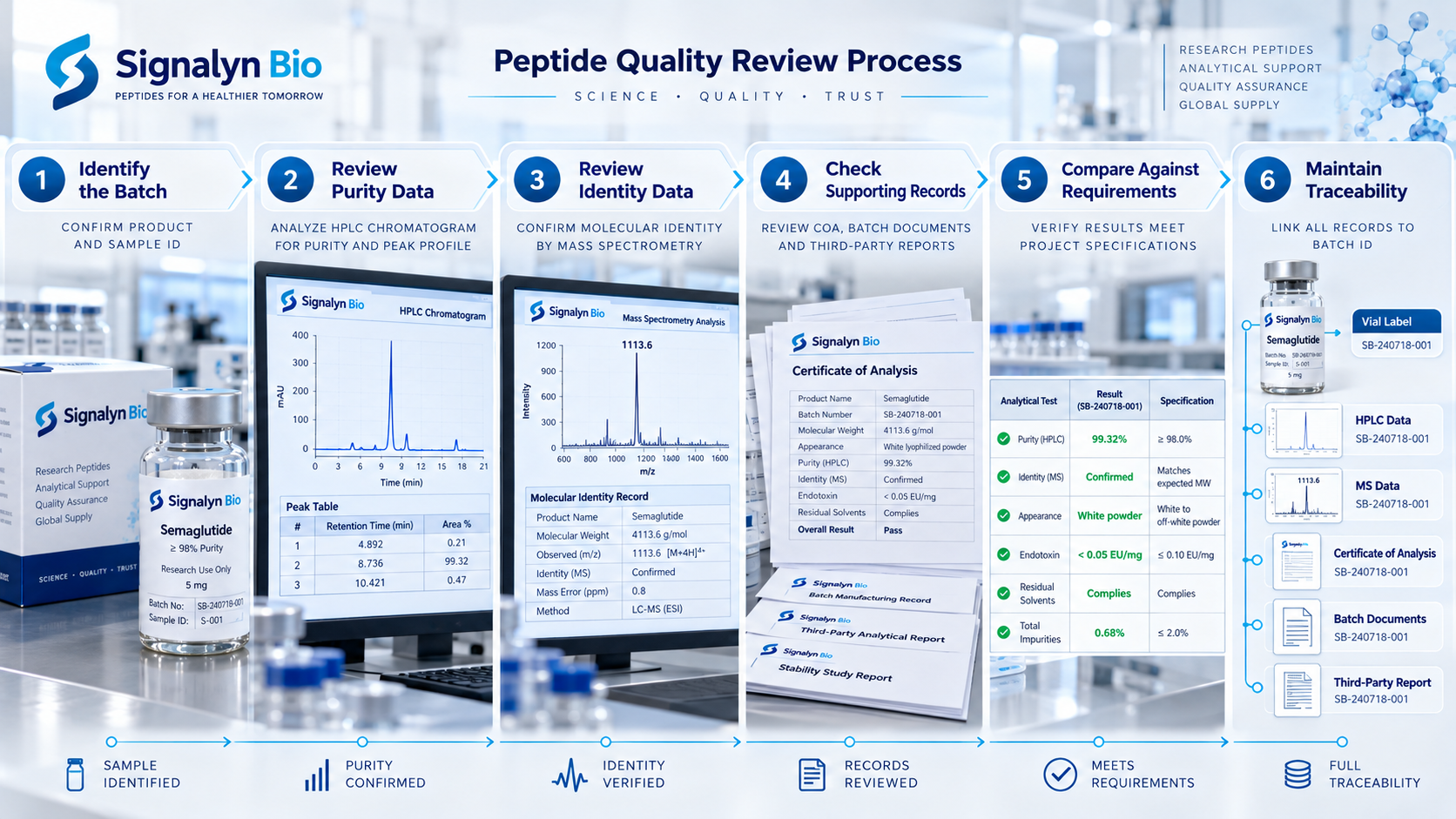
A structured quality review connects the physical sample with its analytical results, supporting records, and batch identifiers before conclusions are drawn.
Identify the Batch
Confirm the peptide, batch or lot number, sample ID, project reference, and applicable specification.
Review Purity Data
Review HPLC chromatograms, reported purity, secondary peaks, and method information according to the testing scope.
Review Identity Data
Review mass spectrometry results or other identity-related records for the material being evaluated.
Check Supporting Records
Review the COA, batch records, third-party reports, packaging records, and other project-specific documentation.
Compare Against Requirements
Compare the available evidence with the relevant project specification and identify missing information or follow-up questions.
Maintain Traceability
Ensure that the analytical records, COA, labels, and documentation remain associated with the correct batch or sample.
QUALITY RESOURCES
Guides for Peptide Quality Evaluation
Use these resources to move from a single reported value toward a more complete review of purity, identity, documentation, and independent verification.
Peptide Purity Guide
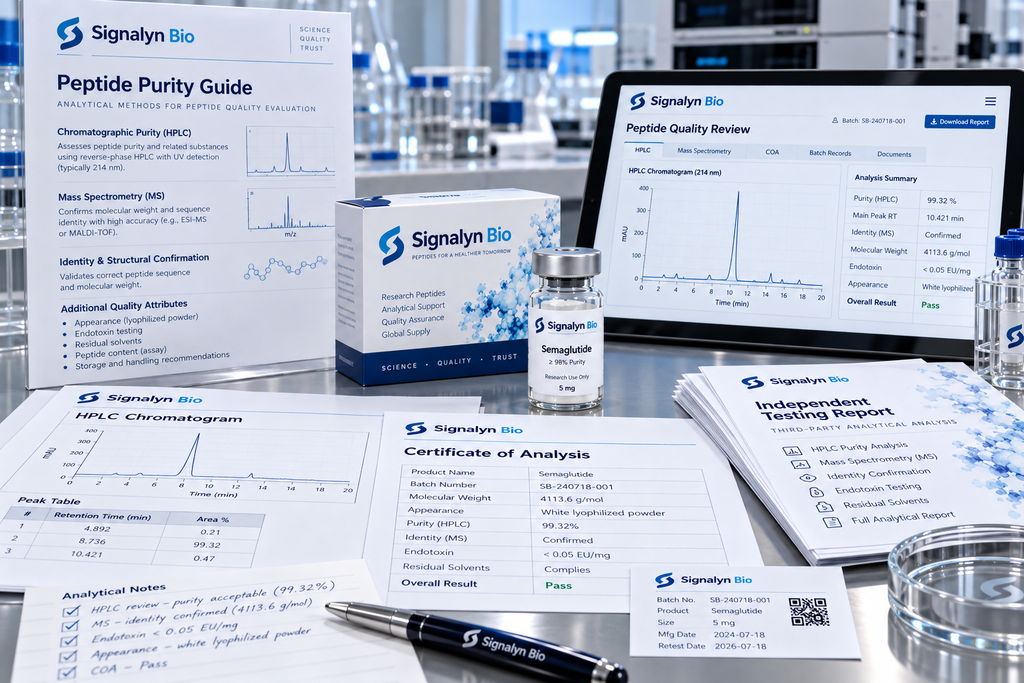
Understand what 99% HPLC purity can—and cannot—tell you about a peptide sample.
How to Review an HPLC Chromatogram
Learn how to evaluate main peaks, secondary peaks, retention behavior, and the context behind a reported purity value.
Independent Testing Guide
See how a peptide sample can be prepared, submitted, tested, and reviewed through an independent laboratory workflow.
PEPTIDE QUALITY FAQ
Frequently Asked Questions About Peptide Quality Control
What does peptide quality control include?
Peptide quality control can include chromatographic purity review, molecular identity verification, batch identification, Certificate of Analysis documentation, third-party testing, and supporting project records.
Is HPLC purity enough to evaluate peptide quality?
No. HPLC supports chromatographic purity assessment, but identity, actual content, composition, and traceability require other evidence.
Why is mass spectrometry used in peptide quality review?
Mass spectrometry can support molecular identity verification by comparing observed mass information with the expected peptide.
What is the role of a Certificate of Analysis?
A COA can summarize batch-specific analytical results, sample identification, specifications, and other available quality information.
Can independent testing be included?
Yes. Third-party laboratory testing can provide an additional verification layer when independent analytical confirmation is required.
REQUEST QUALITY INFORMATION
Discuss Your Peptide Quality Requirements
Share the peptide, batch, analytical testing, documentation, and verification requirements for your project.